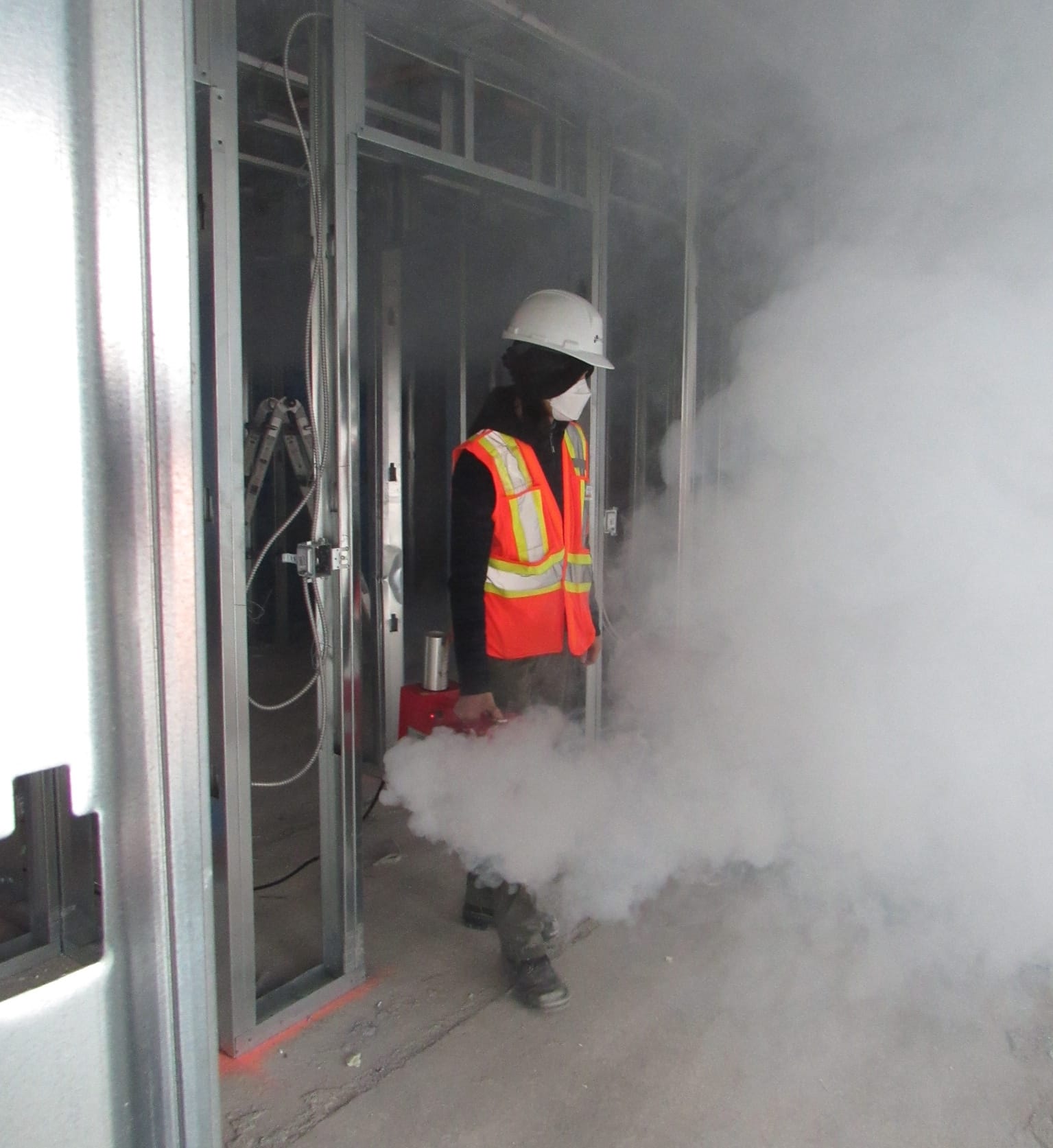
Anna Dziurdzik, B.A.Sc., Certified Passive House Consultant
Project Coordinator
Anna believes that behind every successful project is a dedicated team. She greatly values constant learning, providing a client-focused mentality, and attention to detail in her work. Anna loves using her passion for sustainability and energy efficiency to help clients make informed decisions that lead to durable and high-performance buildings.
Services
Energy and Carbon ReductionASHRAE Energy Audits (Levels I, II, and III)Deep Energy RetrofitPassive House and EnerPHit
B.Arch.Sci. in Engineering Science (Infrastructure), University of Toronto, 2019
Certified Passive House Designer / Consultant Exam & Designation, August 2022
Flixo Training – Model Thermal Bridges for High-Performance Buildings, December 2023
PHPP v.10 Training, December 2023
Association
CaGBC (GTA EGP Chapter)
Passive House Canada
PEO (in progress of P.Eng.)
Representative Projects
Guelph Non-Profit Housing Corporation
Deep Energy Retrofit
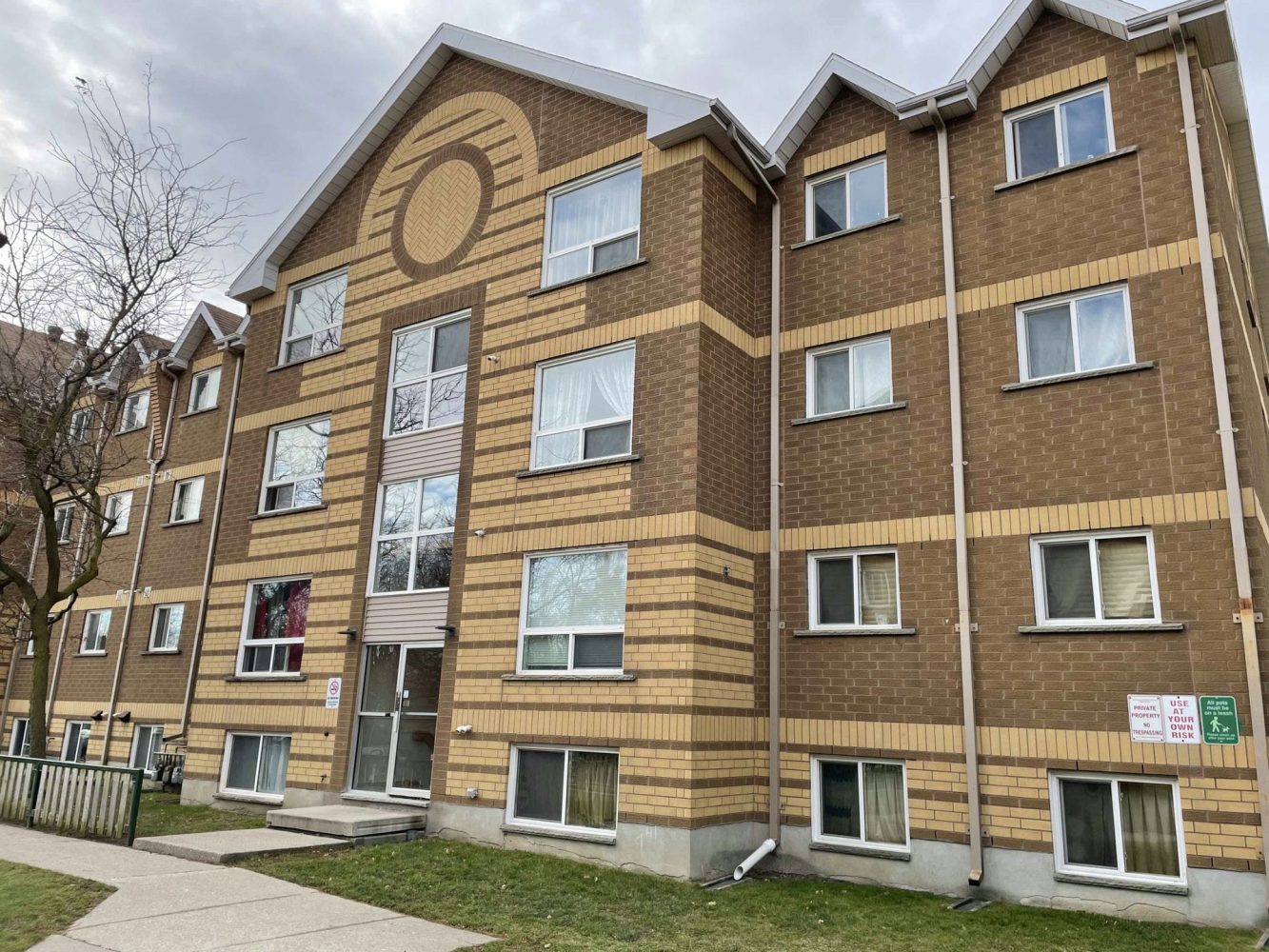
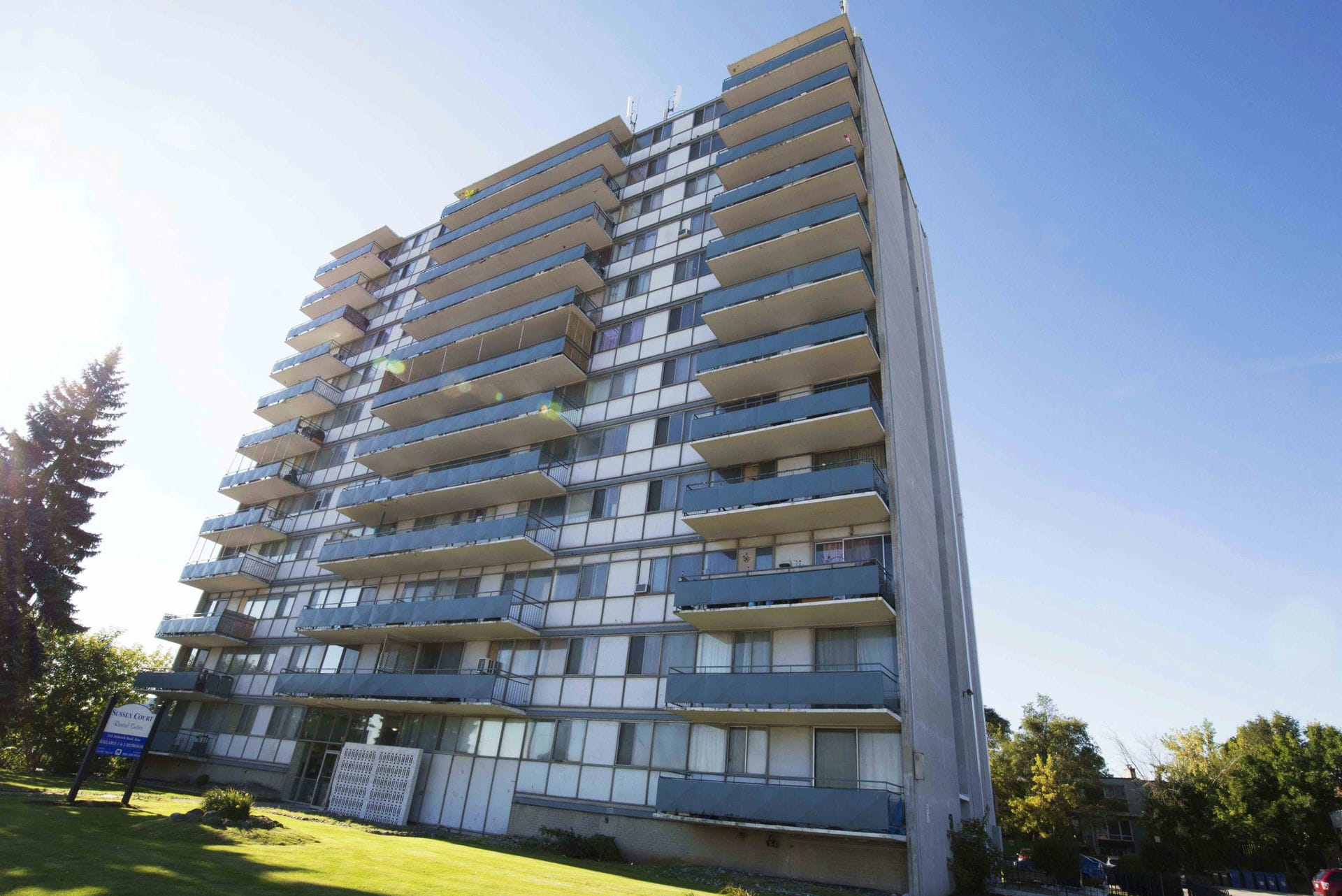
Detailed energy audits were provided for a portfolio of buildings, leading to retrofit measure recommendations aimed at saving 25% of energy and greenhouse gas emissions.
Project role
Project Coordinator, Site Reviewer, Energy Modelling
The project included a review of all drawings and design documents for two low-rise, multi-unit residential buildings to prepare a whole building energy model. Modelling was completed using CANQuest software to demonstrate compliance with the requirements of the National Housing Co-Investment Fund.
Project role
Project Coordinator, Site Reviewer, Energy Modelling
Services
Energy and Carbon Reduction
Energy Modelling
10988/10990 Warden Ave, Markham
Passive House Consultant Services
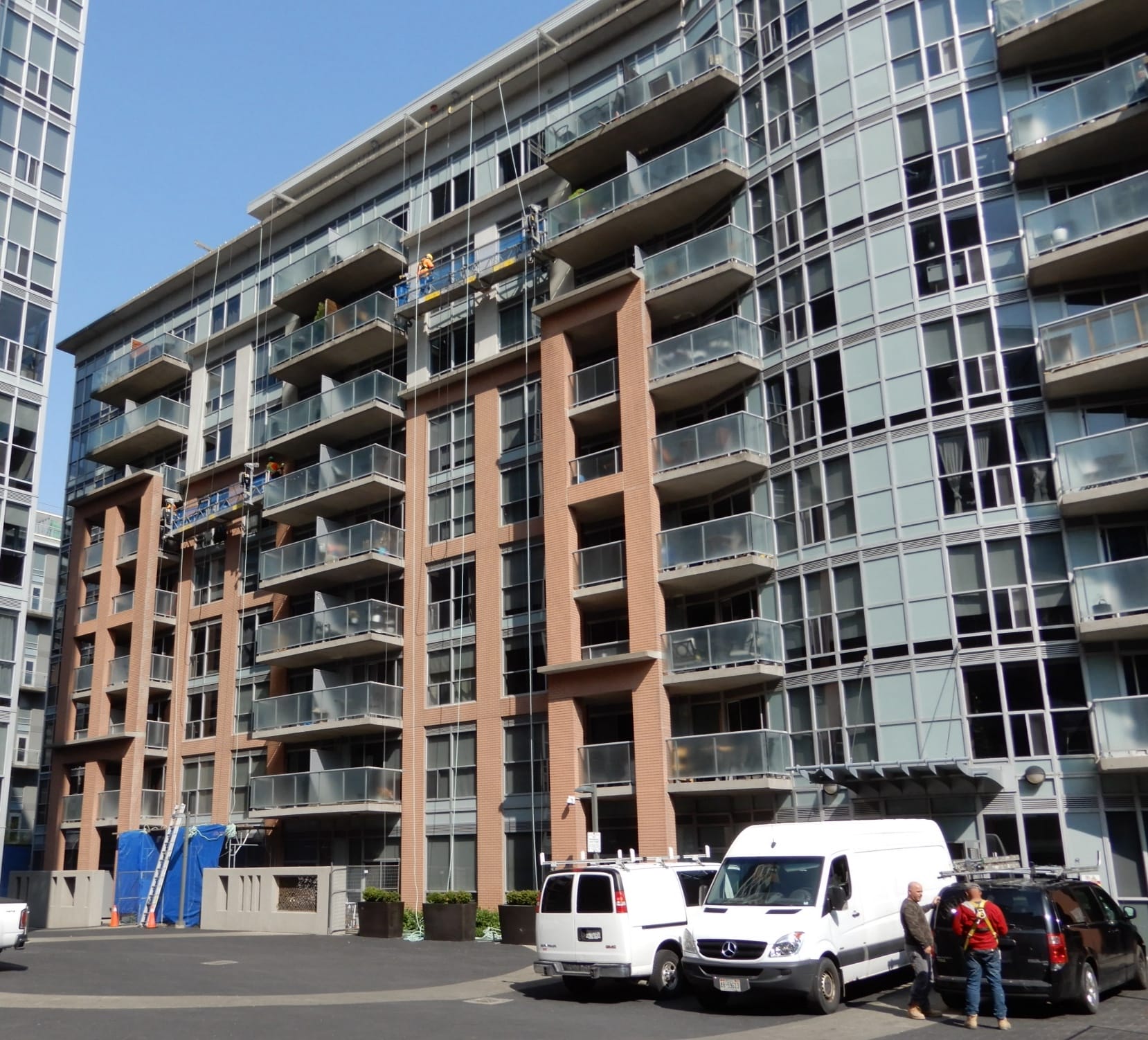
Passive House Consulting services including energy modelling using Design PH and PHPP, detail and document review, thermal bridge modelling, preparing Passive House specifications, construction review, and air tightness testing.
Project role
Project Coordinator, Passive House Modelling
Services
Energy and Carbon Reduction
Passive House and EnerPHit
Multi-Disciplinary Engineering Teams: Why It’s Always Better When We’re Working Together
How a Multi-Disciplinary Engineering Team Helps Deliver Successful Projects
When a building owner sets ambitious goals—like cutting energy consumption by more than 50% and reducing greenhouse gas emissions by 85%—those results don’t happen by chance. They require a team of specialists, like a multi-disciplinary engineering team, working side by side, who can tackle every angle of a complex retrofit in-house.
The Power of a Multi-Disciplinary Engineering Team
At Pretium Engineering, we bring mechanical, electrical, structural, building envelope, and energy modelling expertise under one roof. This breadth of capability makes us a true one-stop shop for engineering needs—whether it’s restoration, deep energy retrofits, or new construction.
Instead of juggling multiple firms and consultants, our clients benefit from seamless collaboration. When our teams work together from the outset, we’re able to:
Streamline Project Delivery With all disciplines in-house, communication is direct and ongoing. This avoids the delays of coordinating across external consultants and keeps projects moving smoothly from concept to construction.
Reduce Surprises and Extra Costs Our engineers share a common understanding of the project scope, so design conflicts are resolved early—before they lead to costly change orders during construction.
Deliver Better Long-Term Performance By coordinating envelope and mechanical solutions alongside structural and electrical considerations, we design strategies that improve durability, optimize efficiency, and meet evolving performance standards such as Passive House, B19, and Energy and Water Reporting and Benchmarking requirements.
Simply put, our multi-disciplinary engineering team’s approach means fewer gaps, fewer headaches, and better outcomes.
Case Study: 71 Sanford Avenue, Hamilton
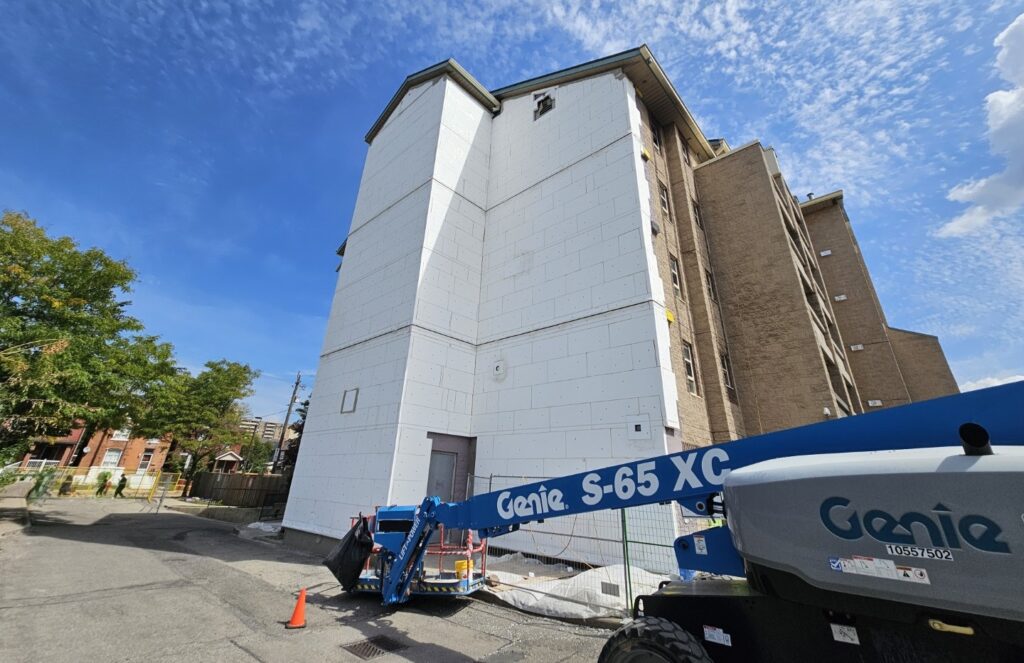
A strong example of Pretium’s multi-disciplinary approach is the deep energy retrofit underway at 71 Sanford Avenue North, a six-storey, 57-unit non-profit housing complex built in 1993. In addition to the residential units (six one-bedroom and 51 two-bedroom suites), the ground floor includes 10 assisted-living rooms leased and operated by others. The building’s total area is approximately 69,500 ft² (6,450 m²), excluding the underground parking garage. Major mechanical systems—including heating boilers, domestic hot water boilers, and a make-up air unit—are housed in a rooftop penthouse, with additional mechanical and electrical spaces located in the basement.
For this project, our team began with a detailed review of all drawings and design documents. Using the IES Virtual Environment software platform, our in-house energy modellers developed a comprehensive whole-building energy model to evaluate a range of energy conservation measures (ECMs). The goal was to identify a package of measures that would achieve the Canada Greener Affordable Housing (CGAH) program requirements: a 70% reduction in site energy use and an 80% reduction in GHG emissions, relative to pre-retrofit performance.
Once a compliant retrofit package was established, Pretium prepared full design and bid documents for the proposed measures. Our role continues beyond design: we are now providing contract administration and construction review services for the construction/implementation of all scopes, ensuring quality and performance are maintained from concept to completion.
Building Better Together
Deep energy retrofits are some of the most technically challenging projects in our industry. Success depends on collaboration across disciplines and a unified strategy from start to finish.
At Pretium, we don’t just coordinate between specialties—we integrate them under one roof. This gives our clients peace of mind, knowing they have a single, multi-disciplinary engineering team managing their project with the technical depth, problem-solving capacity, and accountability needed to deliver exceptional results.
Because in the end, it’s always better when we’re working together.
A deep energy retrofit achieving EnerPHit Certification, resulting in a new building exterior, improved air quality and a more than 60% reduction in energy consumption and greenhouse gas emissions.
Services
Building and Structural RestorationEnergy and Carbon Reduction
Subservices
Deep Energy Retrofit, Passive House and EnerPHit
Sector
Residential
Duration
2018-2024
Client
Windsor Essex Community Housing Corporation
Partners
Peel Passive House, CK Engineering
Project Value
$15,000,000
Project size
20-storey building (300 units)
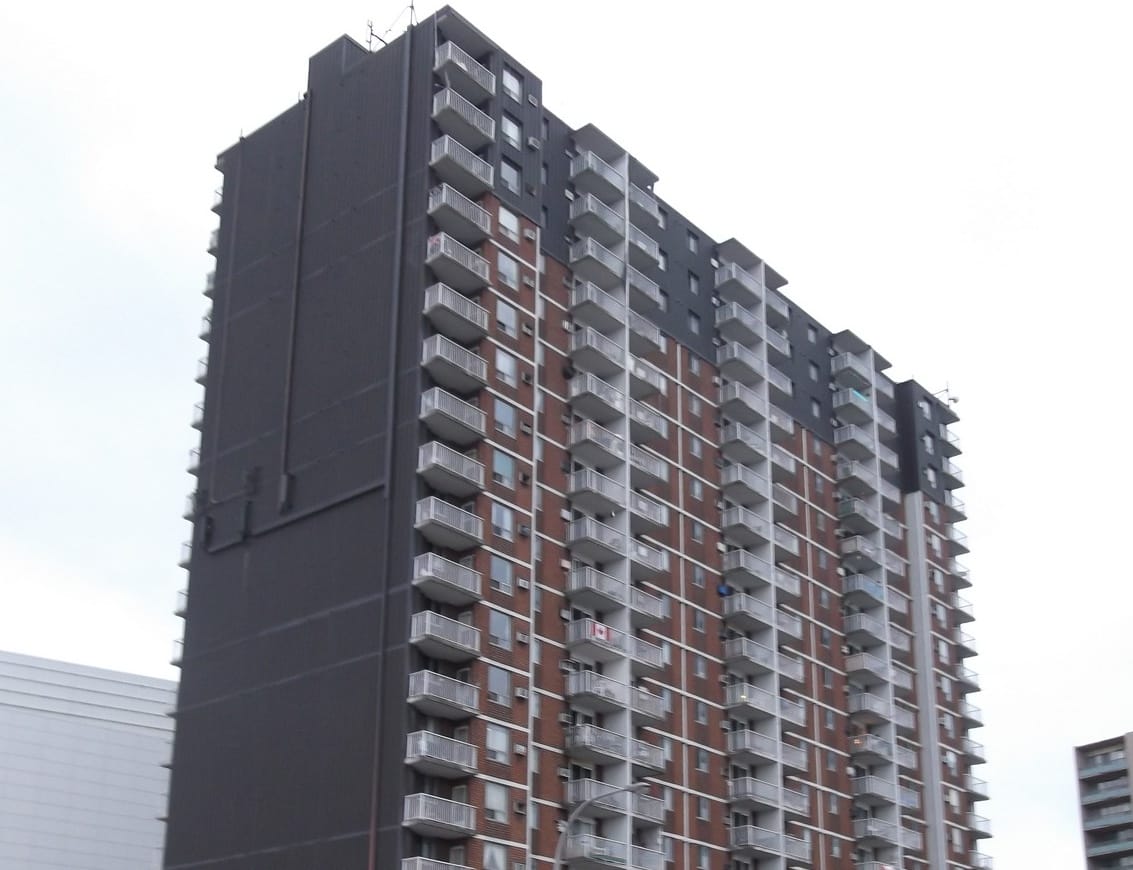
255 Riverside Drive East is a 20-story, 300-unit non-profit housing building originally constructed circa 1975.
As one of the largest social housing providers in Ontario, Windsor Essex Community Housing Corporation (CHC) has a deep commitment to sustainability, implementing projects at their existing buildings that are targeting the highest performance levels and creating new high performing buildings. With that in mind, Pretium was selected to be the Prime Consultant to complete CHC’s first Step-Wise EnerPHit project at Riverside Drive.
The project team conducted a feasibility study to determine options for each of the systems requiring renovation. Eighteen scenarios were modeled in PHPP with changes to the:
Exterior cladding
Balconies
Roof assembly
Floor slab and foundation walls
Ventilation design
Domestic hot water system
Vent stacks
Penthouse
Lighting
The design options were narrowed down based on the EnerPHit requirements, impact on residents, and price until an optimal recommendation was achieved. Energy modeling and reporting for the National Housing Co-Investment Fund was also completed.
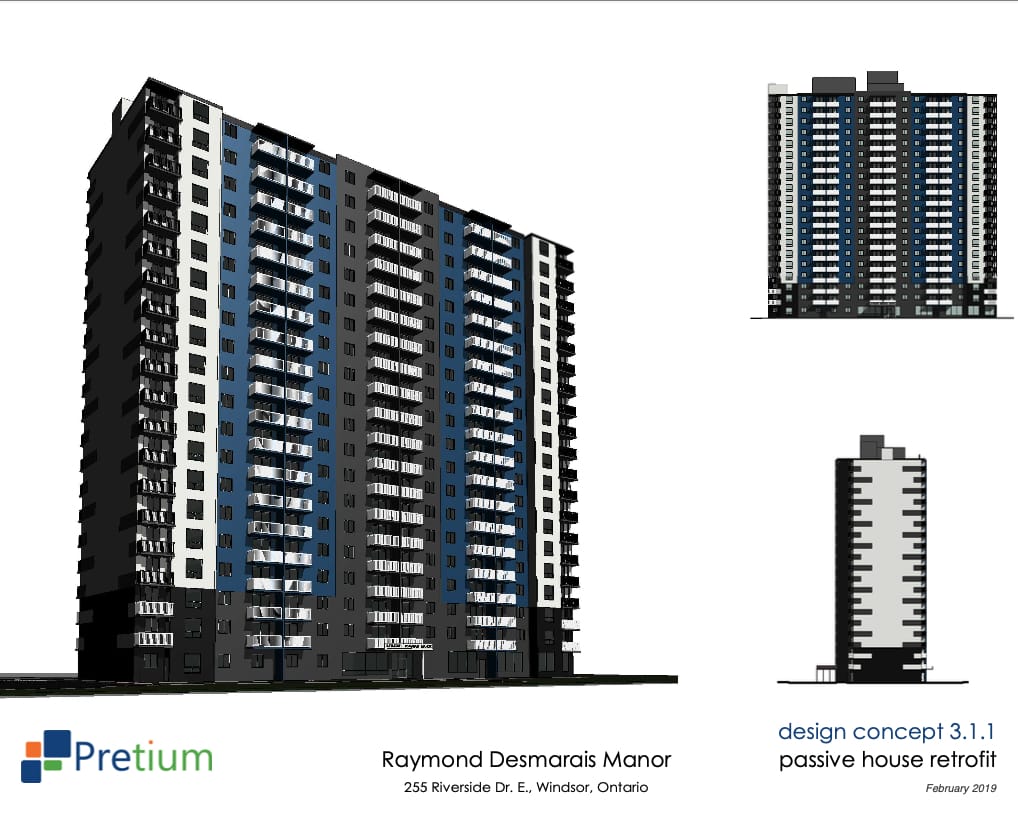
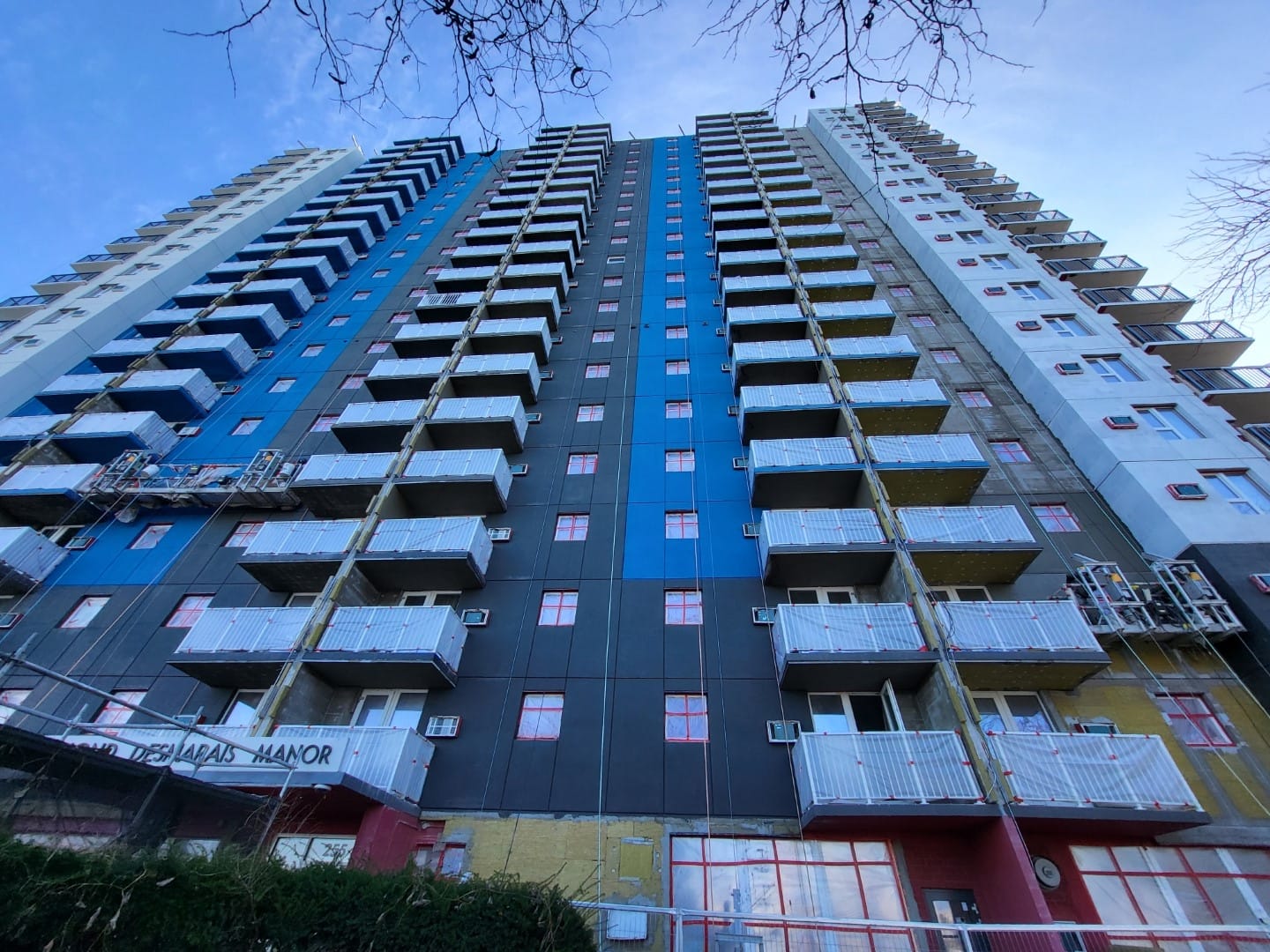
Specifications for the renovation were prepared including the preparation of detailed drawings, permit application, and architectural renderings for the new exterior cladding. Construction review and contract administration services are ongoing with mechanical system installation complete and building envelope upgrades scheduled to be complete in July 2024.
To deliver this project, Pretium completed the following measures:
Condition Assessment and/or Feasibility Study
A detailed assessment of existing conditions, including drawings, permitted use, failure mechanisms, and remedial options, allows for clients to choose the building restoration and renewal program that best suits their objectives.
Energy Modelling
A quantitative tool that assists designers in evaluating the environmental, technical, and financial viability of a proposed building retrofit or design for a new building. The data obtained from the analysis allows designers to communicate recommendations to building owners and managers more effectively. The information is used to identify optimal solutions.
Design and Specification
Design documents describe the project scope, materials, and procedures based on information collected during the assessment/feasibility phase with the Owner’s agreement on approach and budget. They communicate to the contractor in a way that promotes refined pricing and increases the potential for success through improved workmanship, fewer changes and disruptions to occupants, a shorter schedule, and cost within budget.
Tendering
A fair and competitive tender process is followed for both public and private projects. During the tender process, we respond to queries, prepare addenda, and walk the work area with the bidders. On closing of tenders, we prepare a written summary and analysis of the bids received.
Contract Administration and Construction Review
Once a contractor is selected, our team periodically visits the site to confirm that the work is being completed in accordance with the project specifications and provides contract administration from start to completion.
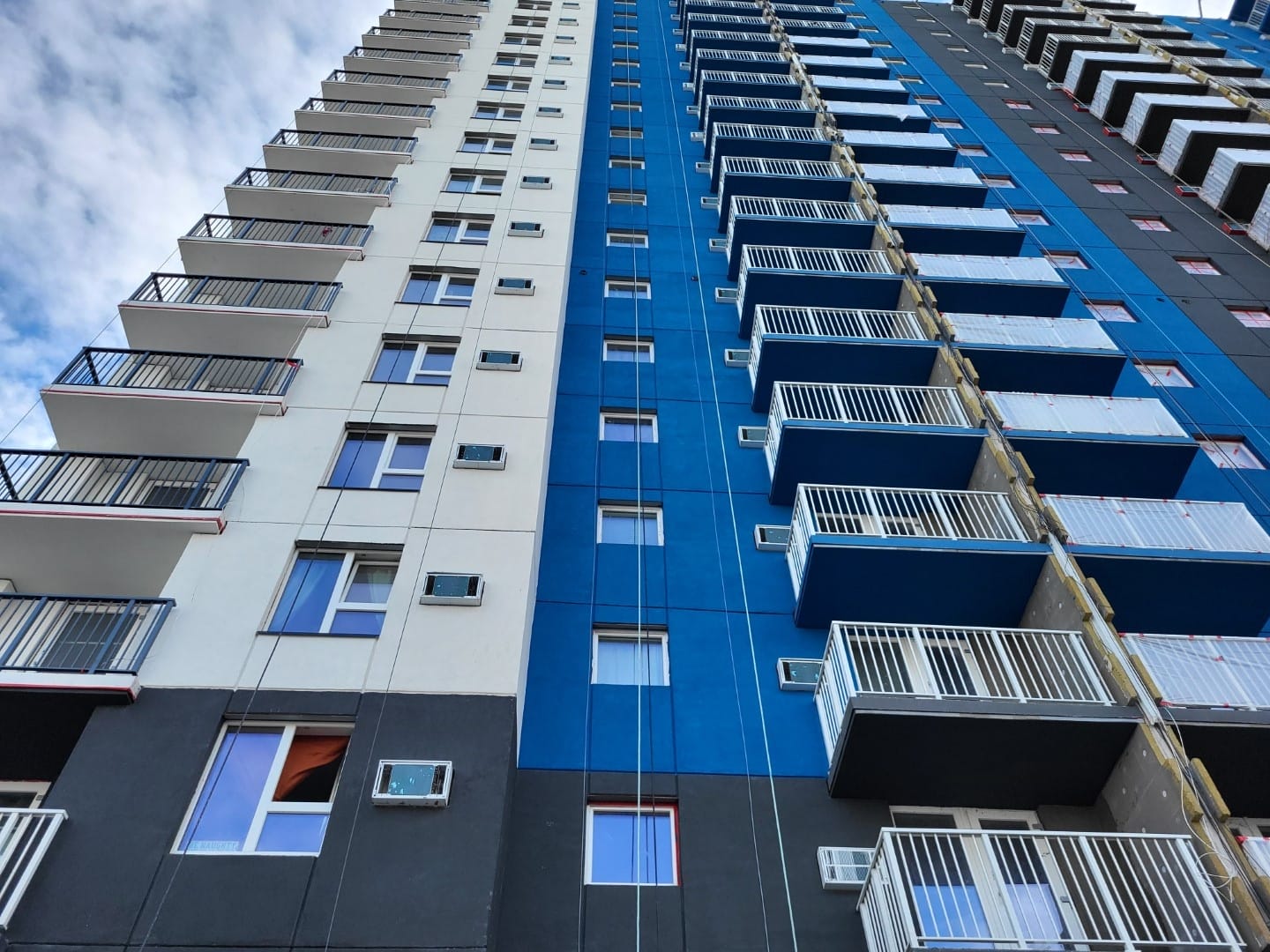
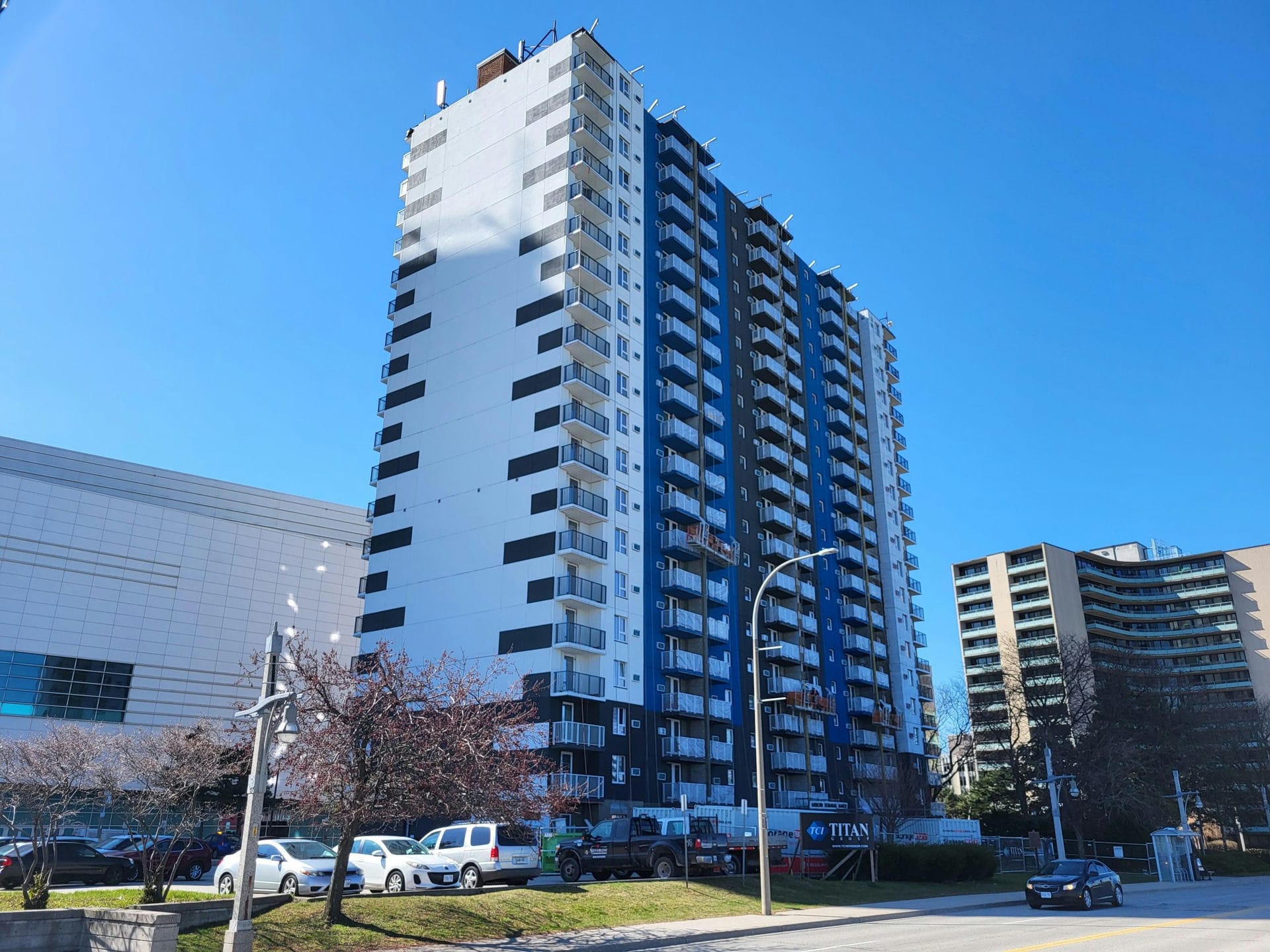
The building has been given new life, with all upgraded systems and an eye-catching black, white, and blue exterior. The benefits of this project do not stop at the extended life and curb appeal:
The annual energy consumption is expected to drop approximately
65%
The thermal bridge free design and new continuous fresh air ventilation system combine to significantly improve indoor air quality and occupant comfort.
The annual greenhouse gas emissions are expected to drop approximately
64%
Original image of the northeast corner of the building.
1/4
The final rendering selected as the design for the EIFS overcladding project.
2/4
Installation of the new mineral wool EIFS in various stages of progress including insulation, base coat, and finish coat.
3/4
Northeast corner of the building, nearing completion.