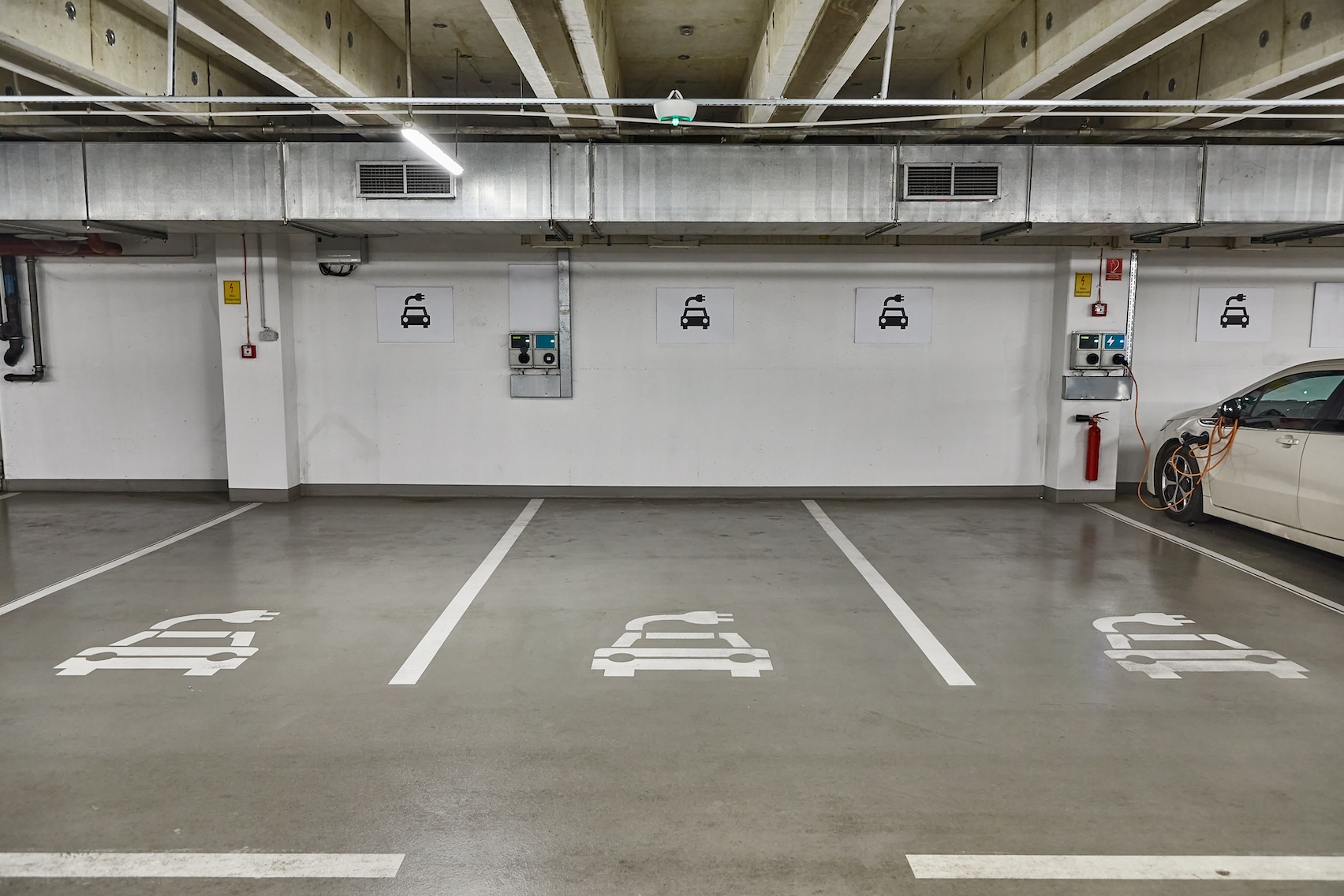
Why EV-Ready Multifamily Buildings Are Key to Canada’s Decarbonization Target

Mechanical Engineering

Engineers Help Building Owners Determine if their Property is Suited for EV Charging Port Installation

As of 2021, the transportation sector was found to emit about 20 per cent of Canada’s total emissions and lowering them will require a rapid adaptation to ZEVs over internal combustion engine vehicles.

In a recent report prepared for Natural Resources Canada, a key finding identified multifamily building as an area of interest to support ZEV adoption. For Canada to reduce its greenhouse gas (GHG) emissions from the transportation sector, while meeting its climate targets, multifamily buildings need to be fitted with charging infrastructure for electric vehicles (EVs) and other zero-emission vehicles (ZEVs).

Canada’s targets are ambitious. In the 2030 Emissions Reduction Plan, the federal government committed to achieving 100 per cent ZEV sales by 2035 for all new light-duty vehicles.

Achieving these targets will require multiple levels of government to not only incentivize the purchase of ZEVs, but to increase access to both public and privately-owned charging stations through a combination of regulations and financial incentives.

Clearing the way for easy ZEV and EV uptake

The federal government has committed $400 million in funding for ZEV charging stations to supply an additional 50,000 public ZEV chargers to Canada’s existing network. Additionally, the Canada Infrastructure Bank is set to invest $500 million in large-scale ZEV charging and refuelling infrastructure.

The Natural Resources Canada report estimates that 679,000 public charging ports will be needed to meet demand by 2040 – that’s a rate of about 40,000 public ports going online per year.

It’s one thing to provide public charging stations, but the same report found the majority of EV owners end up charge at home – and many prefer it that way.

This was no surprise to the Pretium Engineering team. Our mechanical service area lead Jeff Livingstone recently purchased his first EV, and documented his experiences to help inform others exploring EV ownership.

In speaking with some of our team members who own EVs, the feedback was consistent that public charging felt unfamiliar and overwhelming at first. With variations in chargers, charging time, and availability, using public infrastructure was inconsistent at best and frustrating at worst. Not to mention that charging at a home station tends to be cheaper than using a public port.

The latest reports estimate that in order to keep up with Canadian ZEV sales targets,1.6 million parking spaces in multifamily buildings must be retrofitted with charging ports by 2030, and nearly 3.2 million by 2035.

In a recent report prepared for Natural Resources Canada, a key finding identified multifamily building as an area of interest to support ZEV adoption.

Determining EV charger adaptability for multifamily buildings

At Pretium Engineering, we’ve been working with condo boards, owners, and property management groups to streamline and standardize the process of retrofitting buildings to install EV charging stations.

For existing buildings, the process starts with a site visit and investigation report to document whether the current electrical system and infrastructure can support the installation of EV chargers. This process is informed by a mix of quantitative and qualitative data. Consultants typically include figures from engineering calculations, reports, and gather additional information from stakeholder meetings.

If it is determined that the building is set up to support new EV charging ports, the report will include details on maximum system capacities. The voltage capacity is important, as it determines whether a tenant may propose and install a charger on their own, or if the property owner or manager is required to step in.

If the report determines the building does not have the infrastructure to support new EV chargers, it will include information on possible upgrades that may be implemented in order to move forward with any installations.

Incentivizing the transition from combustion vehicles to ZEVs and EVs

Transitioning Canadians from internal combustion engine vehicles to EVs and ZEVs is integral to Canada meeting its GHG emissions reduction targets where increasing the number of charging ports in multifamily buildings will be an important incentive. In fact, it may make or break their decision.

Building owners and managers have an important role to play in this adoption process, which means they also need incentives to fund and coordinate the installation of EV chargers.

Engineering firms can contribute by adopting standardized evaluation processes, making it easier for multifamily building owners and managers to buy into retrofits that provide charging ports to their tenants.


Published on September 25, 2025

Keeping Condo Residents Comfortable During Window Wall Replacement

Building and Structural Restoration

A Window Into How Pretium Minimized Disruptions While Renovating the Rosedale Glen Condos

There’s no easy way around it – carrying out window wall and other fenestration replacements at a multifamily building, while essential to maintain the safety, energy efficiency, and aesthetics of multifamily buildings, can be disruptive to property managers, condo boards, and especially residents.

While not possible to eliminate, it is possible to mitigate disturbances and expenditures through thoughtful preparation, careful planning and ongoing communication with all parties.

That’s how Pretium Engineering managed our window wall replacement program at the Rosedale Glen Condos, a then 40-year-old development near Mt. Pleasant Road and Rosedale Valley Road in Toronto, Ontario.

This post will explore the details on how we kept residents in place and managed the budget while conducting a complete replacement program throughout the building’s two towers.

1. Understanding the Assignment Before Taking Action

A solid understanding of the project requirements is integral to minimising disruptions due to work. This preparation goes far beyond the typical reserve fund study (a high-level look for the purposes of capital planning) which is insufficiently detailed to adequately plan for such large capital undertakings.

At Pretium, we intentionally design replacement programs around minimizing resident disruption.

A component specific condition assessment was undertaken to take a deep dive into the condition of the windows to understand their current condition and unique problems to develop a site-specific repair plan, associated budget forecast and building out of replacement timelines.

This process is best completed a minimum of five years before the scheduled replacements to provide time for capital contributions of the building residents to be modified to suit the budget forecast input into the buildings reserve fund plan. Due to site-specific concerns, this process needed to be accelerated which required effective communication between the residents and condo board to swiftly implement the replacement program.

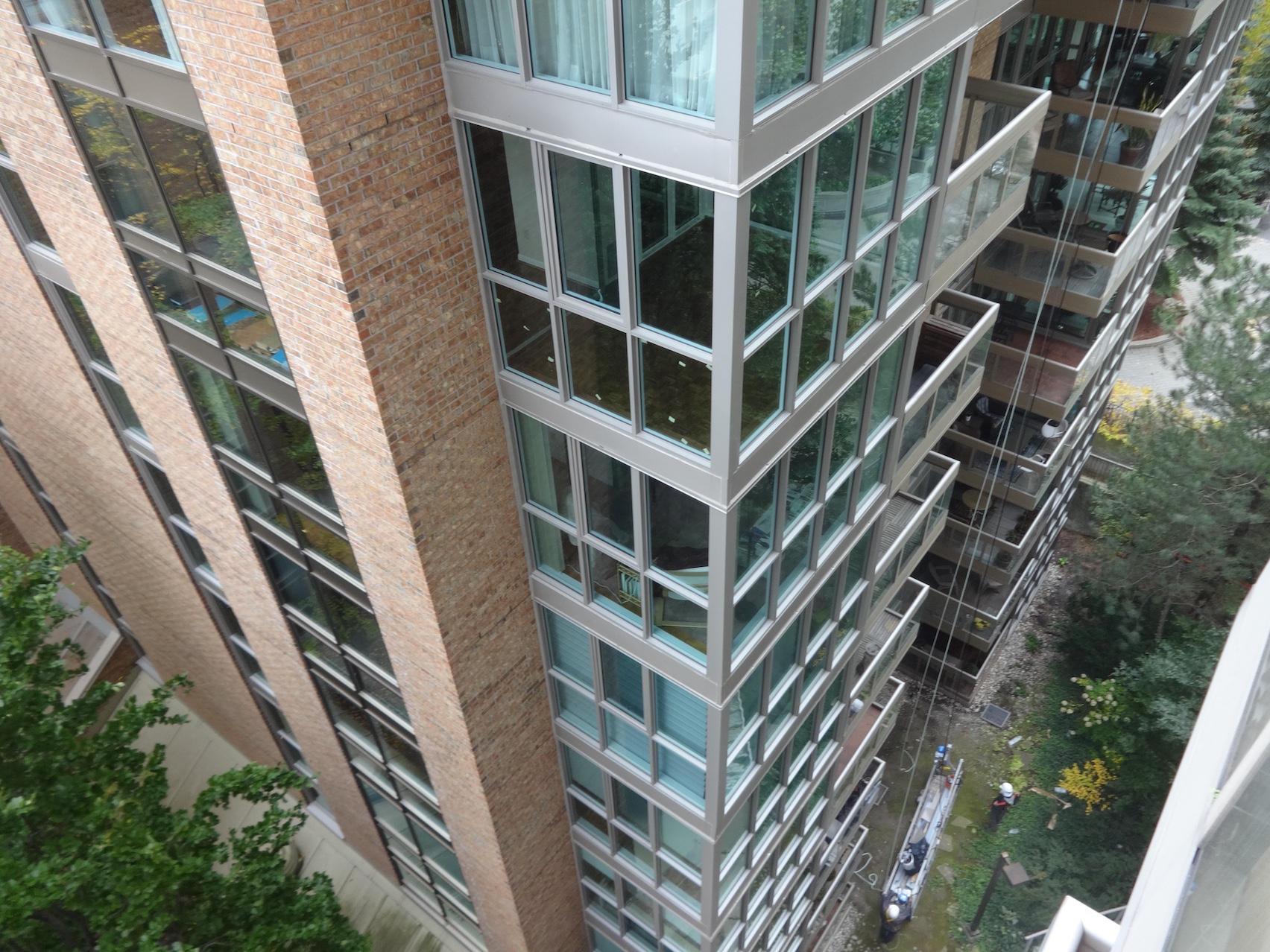
To reduce potential for future project delays, we did not limit our interior review of the window system to a handful of suites. We reviewed all of the condos’ 180 suites, examining the state of sliding doors and window walls. We identified the existing insulation system and how it interacted with the original glazing system, made from aluminum-framed window walls with a combination of fixed insulated glazing units and single pane horizontal sliders.

This information was valuable during the design process but proved invaluable during the construction process. A true understanding of the assignment to work within an occupied residential building requires an understanding of each unique suite. Reviewing all suites prior to the work created a database of unique conditions (cabinets in front of windows, mirrors adjacent windows, custom trim work, etc.) which were communicated with the contractor early to reduce costly delays.

Once this thorough investigation was complete, we determined that we would need to remove and dispose of all existing windows, doors, spandrels, interior drywall at the jambs, ceiling finishes at the head, flooring at sills, and accessories. Additionally, we identified unique conditions which would have a significant impact on project cost if not given due consideration during the design process.

For example, the original window system was an early version of a curtain wall system. Changing the building to a window wall system, as necessitated by site conditions and budget, provided unique challenges which needed to be appropriately managed to achieve project schedule, budget, and long-term performance.

Armed with information, we designed a renovation program to install new aluminum-framed systems at all windows, doors, and spandrels within the existing residential building.

2. Managing and Communicating Expectations

The process of assessing the building took time, but it was this exploratory period that allowed us to accurately forecast project costs and plan the job in such a way to minimize disruption to residents, a primary constraint of the building stakeholders.

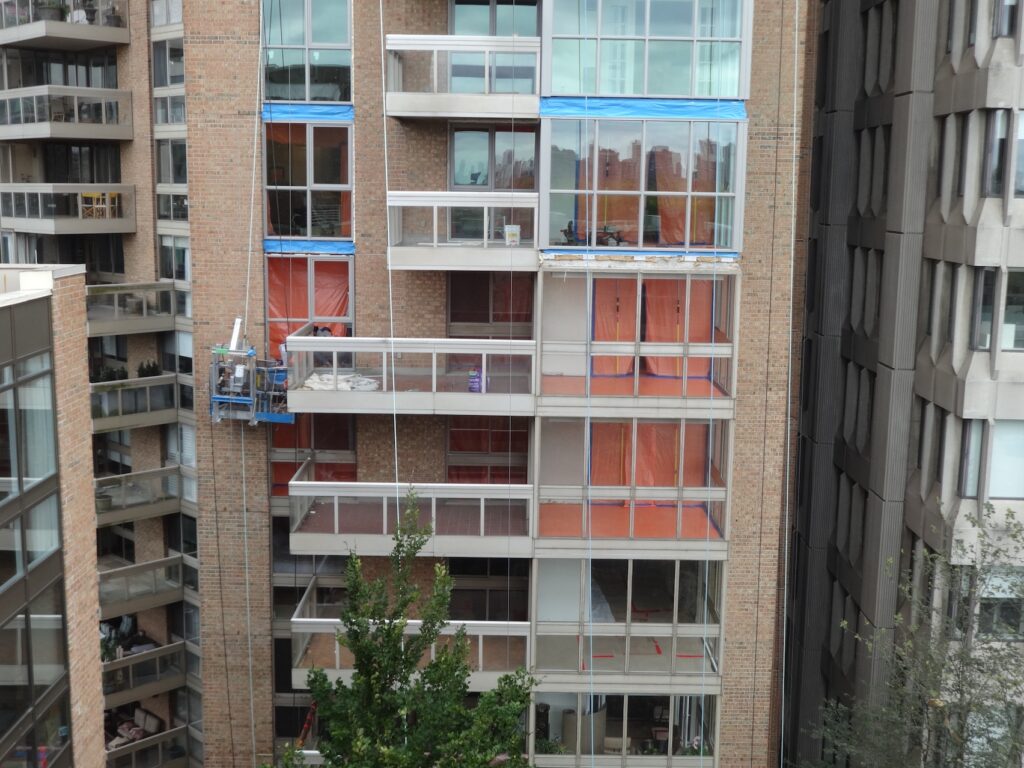
At Pretium, we intentionally design replacement programs around minimizing resident disruption. To achieve this goal, we coordinated with the contractor to schedule and phase the work so that we replaced all elements within a suite concurrently. Through simultaneous work, access periods and associated disruption to each suite was minimized. Such scheduling is important, yet difficult to achieve and requires foresight and diligent execution by the project team to navigate roof anchor limitations, power supply, security, and other practical considerations.

With the help of property management, an information session was held with building residents to communicate expectations of the project early. Residents were further informed about impending renovations on a week-by-week basis, communicating regularly as the program progressed to allow each Suite to prepare accordingly.

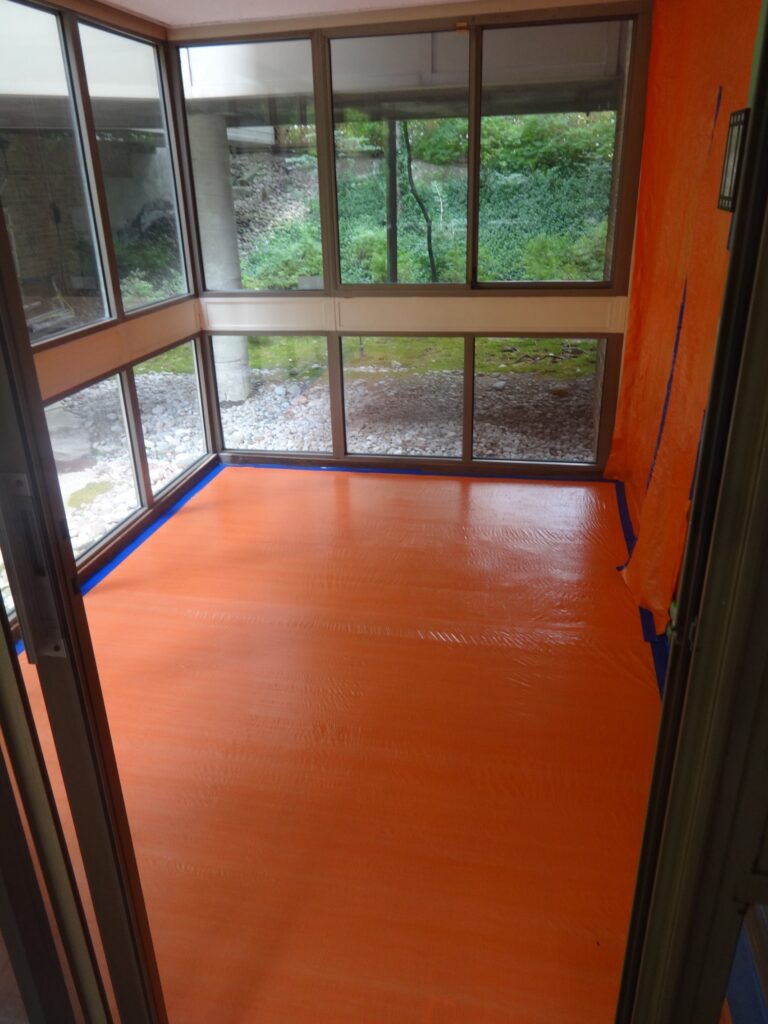
Through effective communication leading up to the time of replacement, once the contractor knocked on their door, the suite was prepared for a window replacement and the suite resident made plans to vacate the suite for the day. The process was optimized to keep each resident out of the suite for one day with the suite always habitable at the end of each workday: no inconvenience of costly offsite lodging requirements for the residents. Through concurrent window and sliding door replacements, each suite was limited to a 10-working day window from the moment the contractor knocks on the door to the time they say their goodbye to a finished interior.

This communication system prepared the stakeholders for a dynamic schedule that evolved as complications arose – and they always will. A successful project is one which can accommodate the unexpected. Examples of situations which required accommodation were changing access and mobilization area limitations, concealed slab edge conditions with a dash of a global pandemic for good measure. Execution of such a technically complicated project which required the aging population of the building to safely vacate the suites during periods of COVID, all while maintaining the pre-COVID budget is perhaps the greatest testament possible for effective communication.

3. Working Smarter, Not Harder

As the financial authority, the condo board’s main concern for this project was associated costs keeping the required special assessment for the residents reasonable. Pretium takes a realistic financial outlook for any of our projects; it would be a disservice to all parties to underestimate the project costing even if this leads to difficult conversations. Pretium manages expectations by requiring the board to allocate contingency allowances or prepare to access condo reserves if circumstances require the budget to increase.

The long-term performance of any window system directly depends on how the window is tied into the adjacent building elements. The conventional tie-in details for these window systems would require the removal of all balcony railings and the existing brick adjacent to the windows which would carry a cost of several million dollars.

Through smart, well conceived detailing, Pretium was able to develop tie-in details to allow for tie-in to adjacent systems which remained in place without sacrificing long-term performance. By working smarter, Pretium was able to make this program financially viable for the residents of Rosedale Glen.

4. A Winning Window Replacement Strategy

Over the course of three COVID-filled years, the project team completed approximately 4,080 m2 of window wall, door, and accessory replacements throughout the Rosedale Glen Condos.

Through our developed fenestration renovation program, we effectively increased the building’s thermal performance, improved air tightness, and reduced annual energy costs. Past complaints of thermal discomfort during the shoulder seasons have been addressed and the interior aesthetic was significantly improved leading to positive impacts to resale values and quality of life for the residents of the building.

Methodical preparation and constant communication allowed us to keep property managers abreast of developments. It also helped us to find cost savings while improving the exterior aesthetic of the building – a delight to all, but especially, to the condo board.

We kept residents happy and in their homes both during and after the work was carried out. This is always an important consideration made more significant considering execution during a global pandemic. Surveys completed after the upgrades found that residents had an improved sense of comfort in their suites – the highest praise we could expect for a job well done.

Published on September 16, 2025