Balcony restoration: What condominium building owners should expect during construction

How to minimize disruption and keep residents informed during a balcony restoration project
Balcony restoration represents both a challenge and an opportunity for condominium communities. It’s an important investment in the performance of the building, but it’s more than likely that its activities will disrupt existing residents.
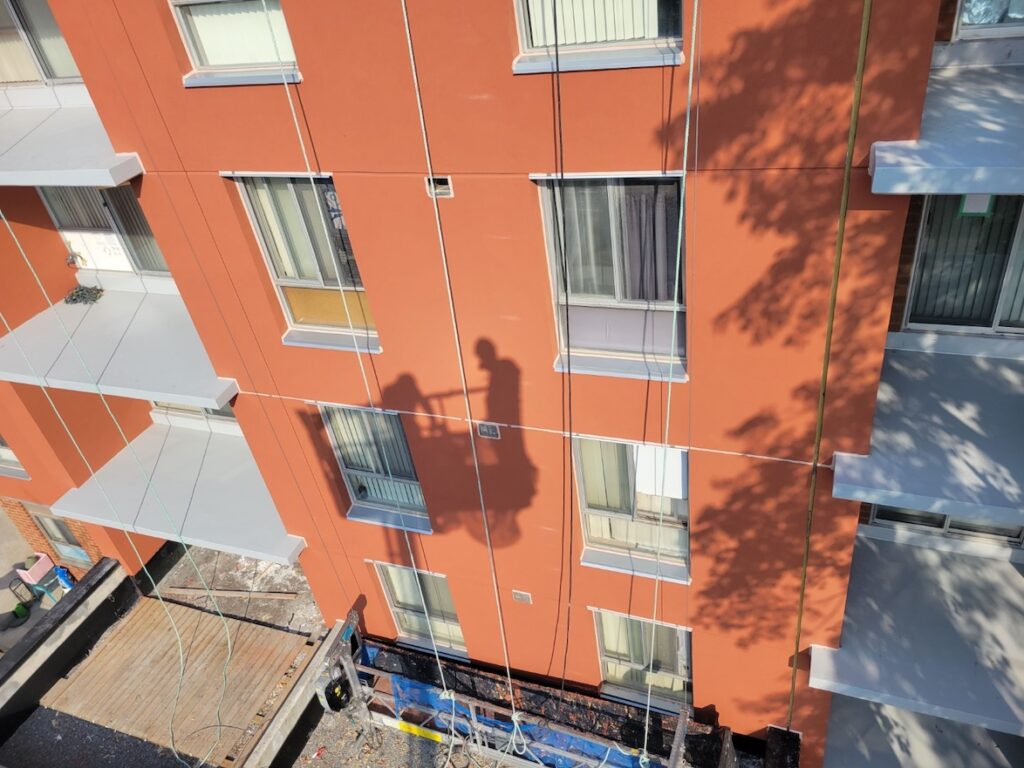
Balcony restoration happens directly outside residents’ homes. They unwillingly live on the front lines of construction activities – dust and vibrations from jackhammering, interruptions from inspections and measurement taking and swing stages going up and down the wall past their units, become part of their new reality. There may be moments when progress isn’t obvious from the outside, leaving those residents frustrated.
The best way to stave off those frustrations is with effective planning, communication and expectation setting for residents.
Before construction begins
By the time a contractor is awarded the project, owners and tenants have usually seen engineers inspecting balconies and know repairs are coming. Once the tender closes, many expect construction to begin immediately.
However, there’s often a delay before crews arrive on site as contracts are finalized, permits are attainted, shop drawings reviewed and materials ordered.
Residents want to understand where the project stands, when work is expected to start and what they’ll need to do before construction begins.
Preparing for the balcony restoration
One of the first steps in any condominium balcony restoration project is clearing the balconies.
Management needs to communicate when items like furniture, planters, flooring and other personal belongings need to be removed before work begins. This may be a simple task for some residents, while others may need extra time, or even assistance. Communicating these requirements early helps avoid delays once construction starts.
Once the balconies are cleared, access will be restricted until the work is complete, a necessity for everyone’s safety. This needs to be clearly communicated with a post on balcony doors.
Why construction seems to stop and start
Resident expectations of project progress may not align with the realities of a given project.
Balcony restoration is carried out in phases. First comes demolition and removal of guards, followed by inspections to confirm repair areas are properly prepared. Concrete repairs require curing time before waterproofing can begin, and waterproofing must cure before new guards can be installed.
Additionally, every phase needs to go through an inspection before the next one can begin. During those gaps between active construction work, residents may see this as progress being stalled, though this isn’t the case. Clear communication about project phasing can ease tensions that may arise from any misunderstandings.
Expect interruptions, like noise and weather delays
The most common resident complaints during balcony restoration arise because of noise and delays.
Concrete removal creates vibration that can be felt in neighbouring units, and the sound can travel farther than people expect. Providing residents with advance notice of noisy work helps them plan around it.
Weather also plays a bigger role than many people realize. Concrete can’t be poured in the rain. Waterproofing can’t be applied to wet surfaces. Extreme heat may shorten workdays.
It can look like nothing is happening, but often, the pros are simply waiting for the right conditions to move forward.
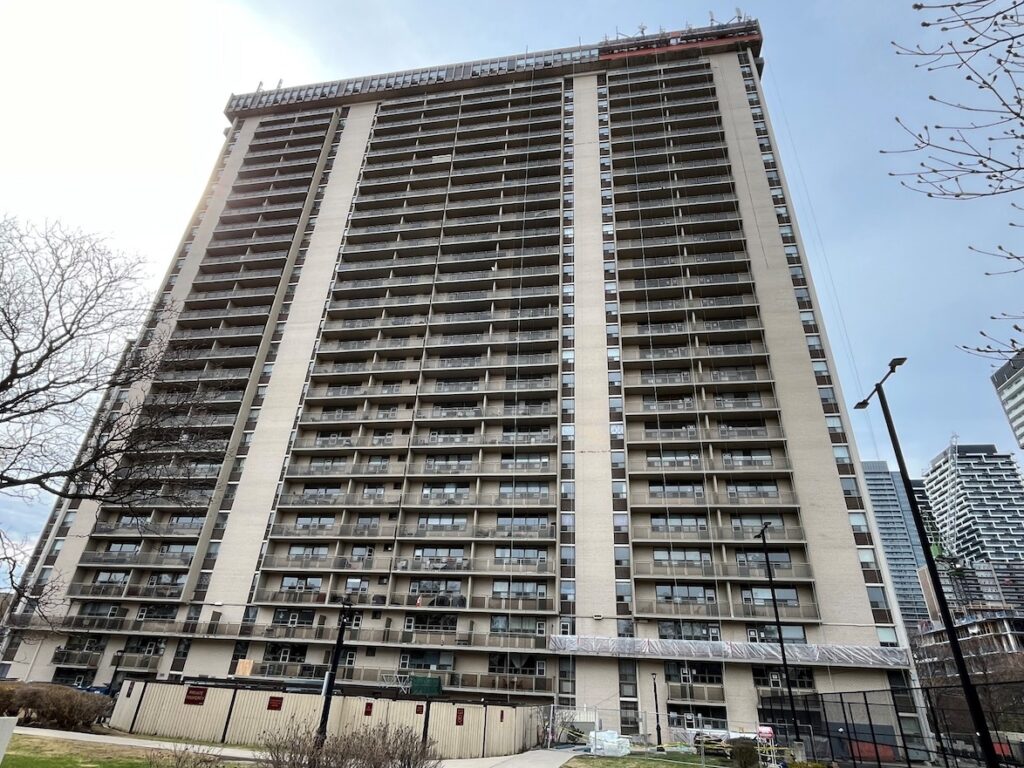
101 Kathleen Street: Restoring balconies of occupied units
It’s a point of pride that Pretium Engineering minimizes disruption while residents remain in place using clear, proactive communication throughout multifamily construction projects.
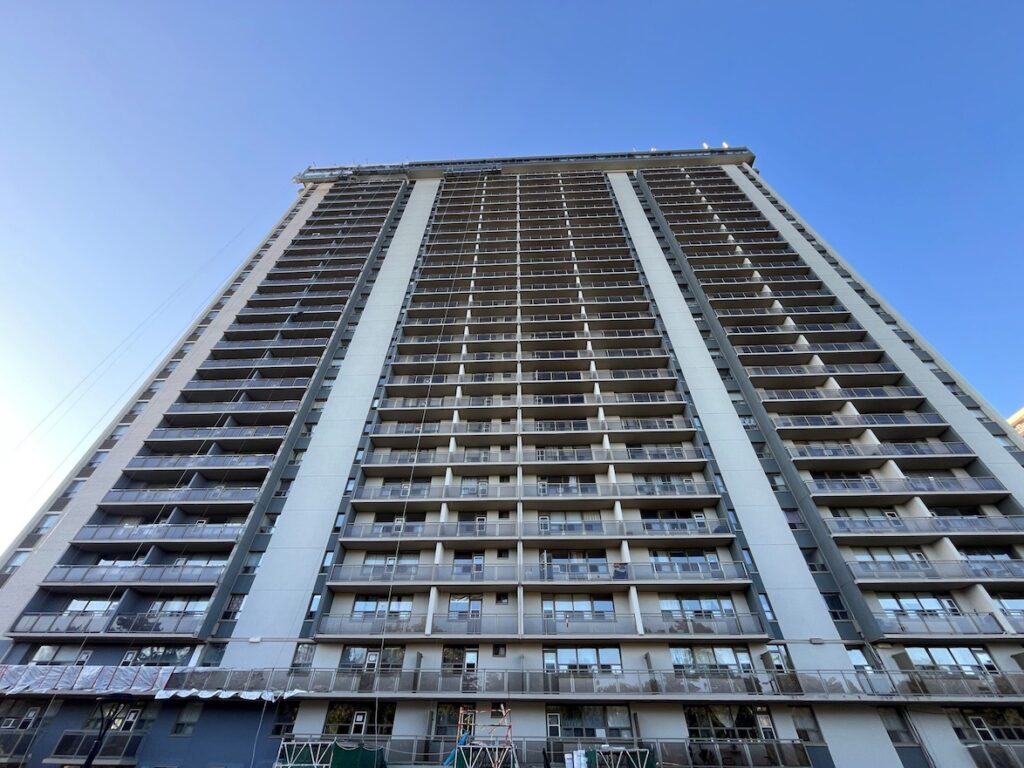
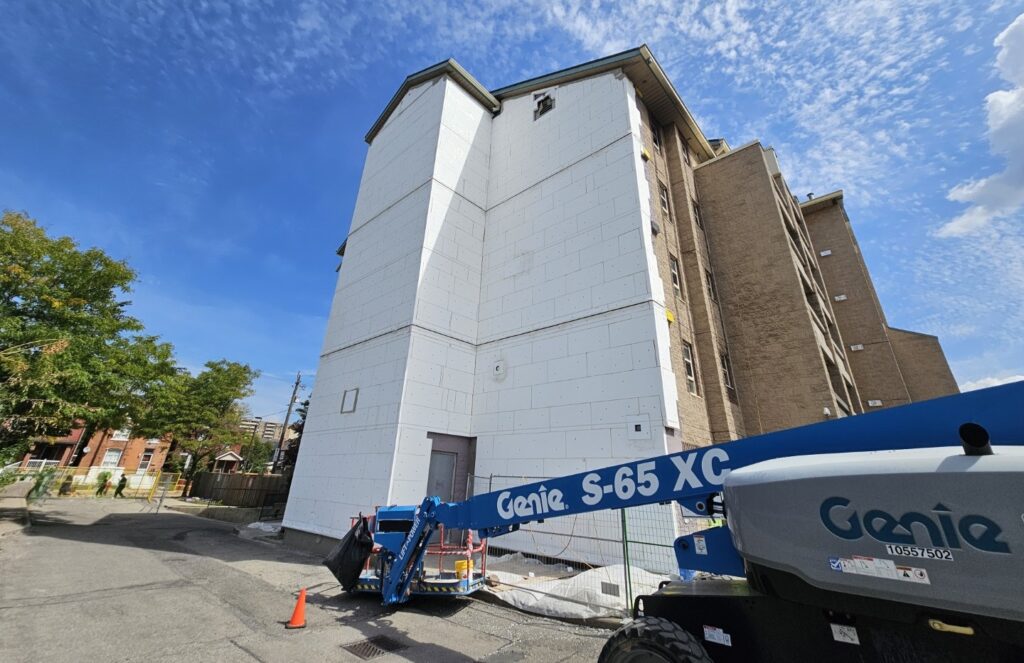
In the case of 101 Kathleen Street in Whitby, our team provided building enclosure consulting for the restoration of a six-storey, 120-unit condominium that was constructed in 1979.
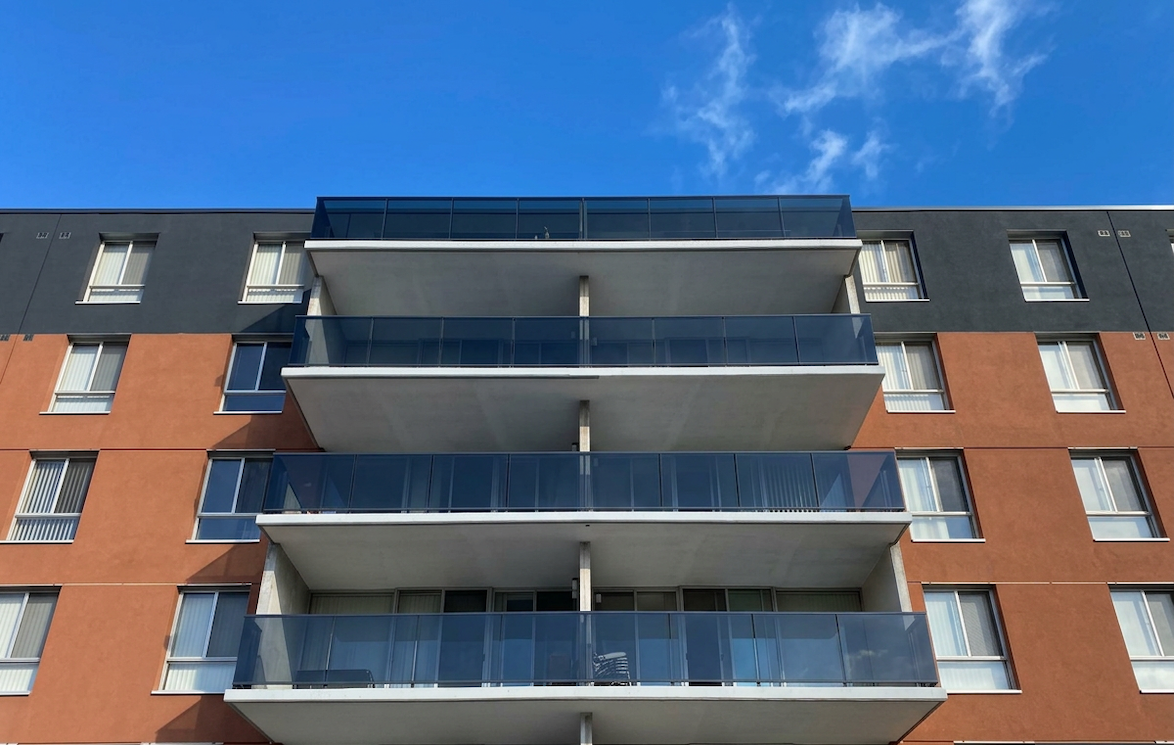
The project included balcony concrete repairs and waterproofing, replacement of aging metal picket guards with modern aluminum and tinted glass guard systems, and an EIFS retrofit designed to improve building aesthetics and the thermal performance of the exterior wall and window assemblies.
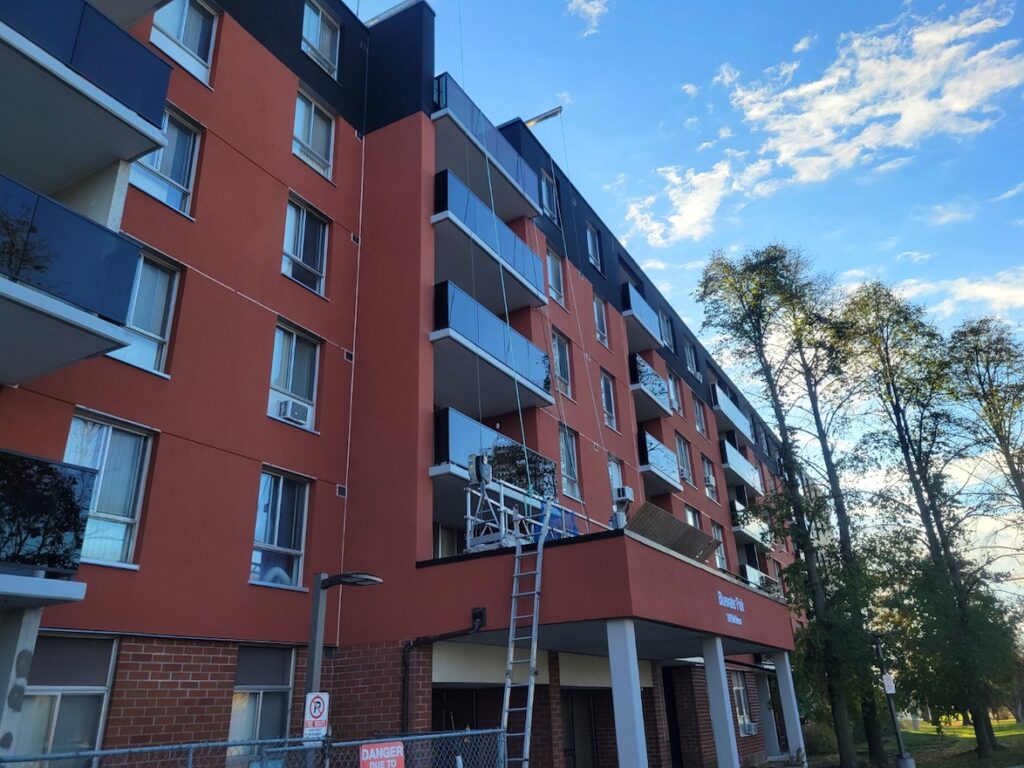
Because the building remained fully occupied throughout construction, careful coordination was critical. Our team collaborated with the contractor to phase the work, communicate milestones and manage resident expectations. By establishing clear communication channels from project outset and providing regular updates, we minimized both disruptions and impacts on residents.
The completed restoration delivered safer, more functional balconies, enhanced the building’s appearance and reduced energy costs by improving the overall performance of the building envelope.
Opening the balconies
To ensure everyone’s safety, balconies will be reopened in phases, once inspections have been completed and any deficiencies have been addressed.
While residents are naturally eager to get their outdoor space back, it’s better to wait for contractor confirmation than to promise a reopening date that may change.
The goal of balcony restoration is twofold: to revive a valued building amenity while causing as little disruption as possible. When technical expertise is matched with thoughtful planning and proactive communication, the result is a project that protects both the building and the resident experience.