Why Roof Performance and Resilience Matters More Than Ever in the Climate-Change Era

Building and Structural Restoration

Prioritizing Roof Performance Over Secondary Uses is Key for Structures Enduring Through Climate Change

Climate change is reshaping how buildings, and their roofs, perform.

The decisions engineers/consultants, institutional and commercial building owners, and property managers make today regarding both new construction and retrofits will directly impact a structure’s ability to withstand climate-related risks into the future.

Roofs are a building’s first line of defence against the elements, and they must be constructed to withstand higher wind loads, heavier rainfall, and more frequent freeze-thaw cycles. As a result, roof resilience is rapidly becoming a critical risk management and asset protection issue.

This creates a design tension, as ancillary roof uses become more popular. Building designers and project teams are often pressured to prioritize secondary roof uses or cost savings over long-term roof performance.

Green/vegetated roofs, solar photovoltaic arrays, water retention systems, communications infrastructure, and rooftop amenity spaces all add value by mitigating climate impacts, supporting sustainability goals, and creating functional spaces.

However, these benefits come with increased roof loads and long-term performance risks if roof systems are not designed with resilience top of mind.

The Argument for Prioritizing Roof Performance

Roofs must perform over the long term, remaining securely in place, preventing leaks during high winds and heavy precipitation, and maintaining occupant comfort. When roof systems fall short of these objectives, the resulting failures are often expensive and disruptive to fix.

An article in Canadian Architect calls for building codes to “get with the times” as climate risks intensify.

While essential, the codes establish minimum life-safety standards rather than focusing on durability, energy performance, or resilience. Roofs designed to code minimums may meet compliance requirements but could still underperform in real-world climate conditions.

It begs the question – do we need higher standards for building codes as the climate crisis worsens to better incorporate resilience in buildings?

For example, a voluntary standard exists for wind and drainage for commercial roofs in CSA A123.26, Performance Requirements for Climate Resilience of Low Slope Membrane Roofing Systems, setting the stage for designers to meet future climate changes.

Even when a design concept is sound and up to code, value engineering often targets roofing systems for cost reductions, meaning that materials could be downgraded, assemblies altered, and performance characteristics diminished. In the age of climate change, this could lead to faster wear and tear on the roofing components that range from small fixes to catastrophic damage.

This practice must change so that enduring roof system performance is top of mind in both new construction and roof retrofit projects.
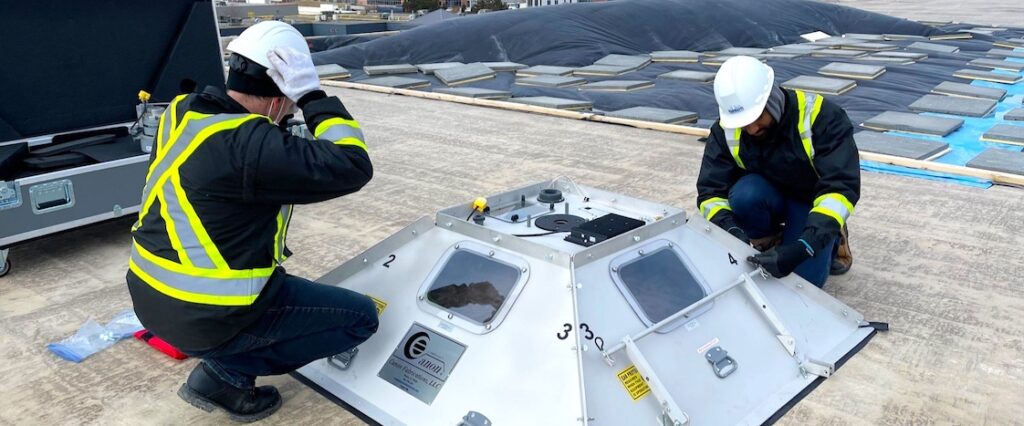
When roof performance is prioritized first, ancillary uses can succeed without compromising its performance or the building envelope.

Balancing Roof Performance with Ancillary Uses

Ancillary roof uses add extra environmental, social, and economic value to commercial and institutional buildings, but these uses must be integrated into a long-term roof performance strategy, not layered on as an afterthought. Roofs overburdened with inadequate drainage, insufficient wind resistance, or minimal insulation are far more likely to fail.

Mitigating competing priorities requires informed decision-making, supported by qualified roof consultants and performance-driven standards that anticipate future climate conditions, energy costs, and technological advancements.

When roof performance is prioritized first, ancillary uses can succeed without compromising its performance or the building envelope.

Institutional and commercial roofs are increasingly central to climate resilience strategies, and the choices engineers, designers, building owners, and property managers make today about design standards, materials, insulation levels, and maintenance will be tested throughout the structure’s lifespan.

Those who prioritize resilient, high-performing roof systems now will be better positioned to protect their property, maintain operations, and successfully adapt their building to a shifting climate in the long run.

The Pretium Way

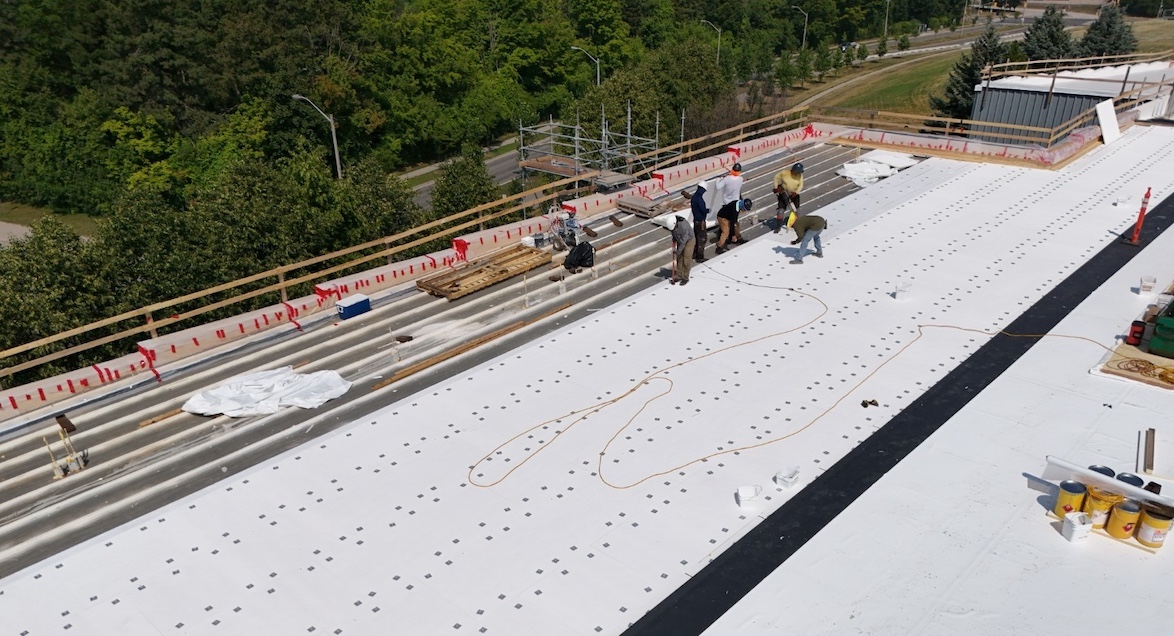
At Pretium, we work directly with you to understand your roofing needs and develop tailored solutions. Our roofing experts assess roof conditions and identity optimal replacement and retrofit approaches, considering forward-looking performance standards. To learn more about Pretium’s roofing projects, check out some of our featured projects, like 111 Scotia Court, Whitby: https://pretiumengineering.com/projects/111-scotia-court-whitby/.

Published on July 24, 2026

Building Envelope Investigations: Finding the Source of Leaks and Moisture Issues

Building and Structural Restoration

How Engineers Manage Water Intrusion to Prevent the Need for Major Building Repairs

The impacts of water on the building envelope are often insidious in nature – what starts as just a small gap in sealant, poorly detailed flashing, or a hairline crack likely won’t stay that way for long.

Whether it enters after damage from a torrential storm or via a gradual leak, moisture will slowly compromise building materials over time. Once this damage is visible, the underlying issue may have spread well beyond its original source, turning a once simple repair into a much larger and more expensive problem.

It’s a pattern Pretium engineers specializing in building and structural restoration see time and time again during building envelope investigations.

Luckily, water damage isn’t inevitable. We have strategies for designing, inspecting and maintaining building envelopes and moisture barriers in ways that dramatically reduce the risk of long-term deterioration and structure-wide damage.

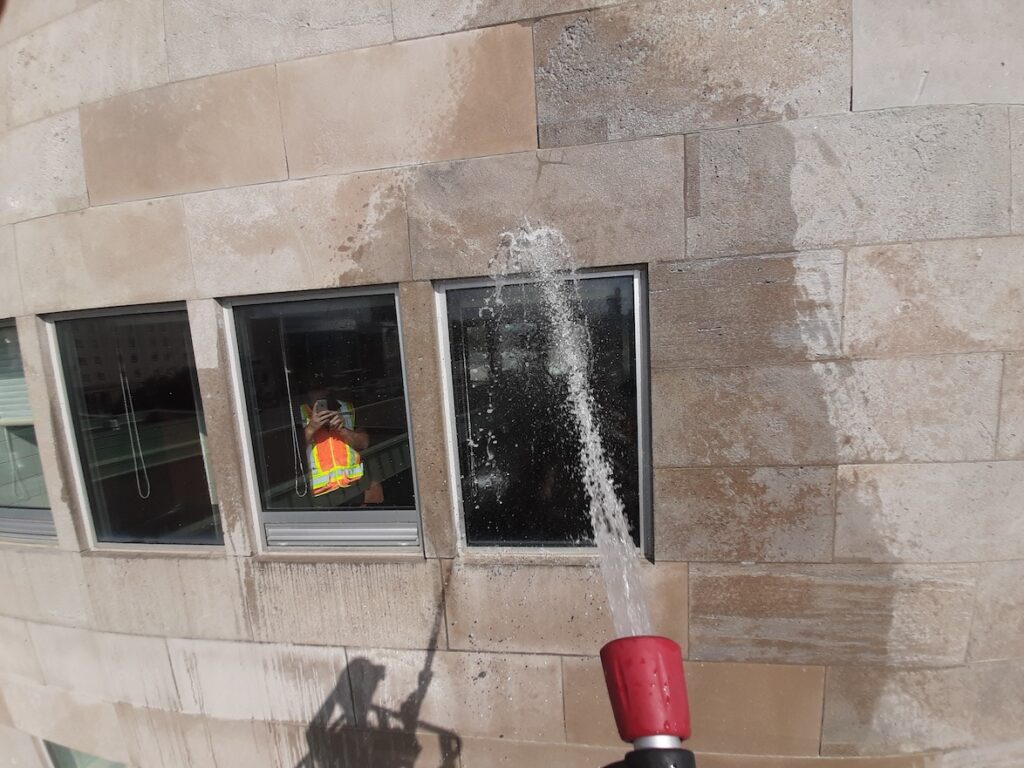
Leakage investigation including testing at a window.

Design buildings assuming water will want to get in

Water doesn’t always behave the way we expect. It doesn’t play by the rules of gravity and just drip down – in its various forms, water can move horizontally along structural members, rise through capillary action, wick through porous materials and follow concealed pathways.

That’s why successful building envelope design starts with the assumption that water will eventually find a way in.

Rather than relying on a single barrier to keep a building dry forever, resilient building envelopes use multiple strategies to keep interiors dry.

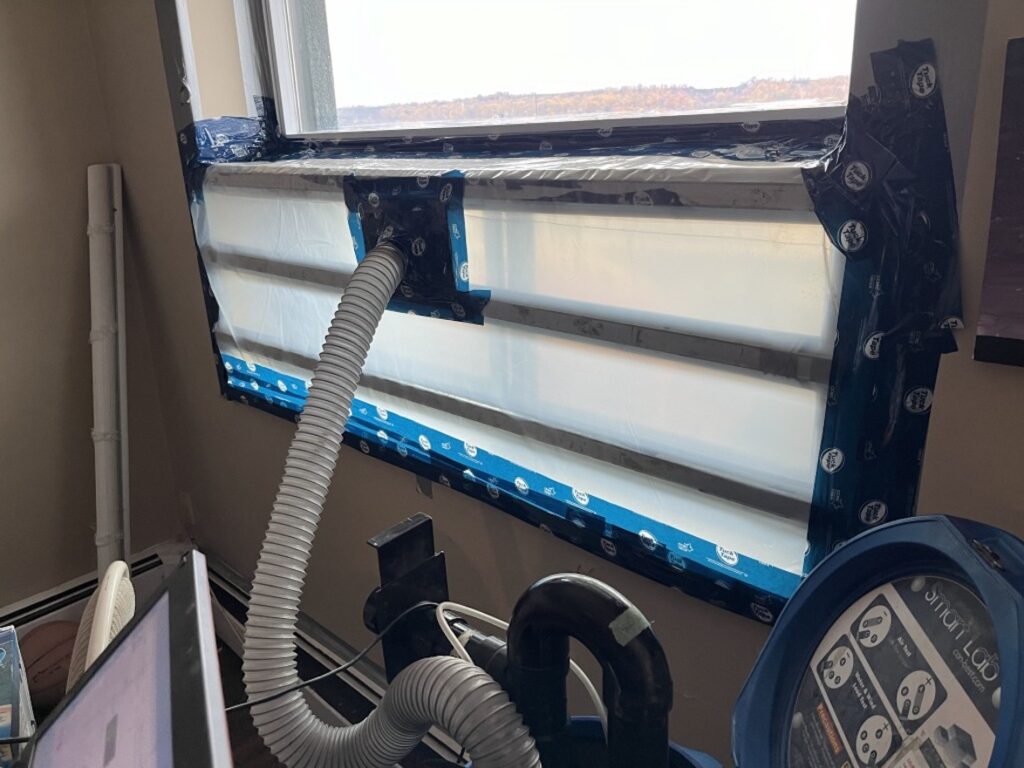
Air and water leakage testing at the operable sashes of a window.

Use multiple means of resistance and layers of defence

No single building envelope component can completely keep water leaks at bay.

Flashings, drainage planes, air and water barriers, rainscreens, sealants, and carefully detailed transitions all work in tandem to protect buildings from moisture intrusion.

This layered approach creates redundancy throughout the assembly, so if one component becomes compromised, others will continue to protect more vulnerable building materials. While water typically follows the path of least resistance, that path can shift with wind pressure, temperature, building movement, and changes in material properties.

Once moisture reaches the building structure, the impacts will vary by material. Wood can rot, steel can corrode, freeze-thaw cycles can accelerate deterioration and prolonged dampness will create ideal conditions for mould growth.

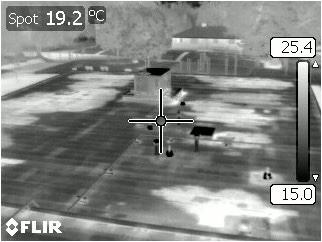
Infrared thermography showing locations of potential leaks on a roof.

Inspect defense layers often to monitor for potential water issues

Even the best-designed building envelope requires regular attention as components age, drainage paths get blocked, and buildings shift over time, creating new opportunities for water intrusion.

That’s why routine inspections are essential. At minimum, buildings should be reviewed once a year, ideally before and/or after winter, when freeze–thaw cycles and snow loads tend to expose vulnerabilities or accelerate existing wear.

If an inspection identifies signs of a leak, or if occupants report recurring leaks, it’s important to complete a full building envelope investigation. Identifying the true source of a leak early can significantly reduce the extent and cost of future repairs.

There’s a saying in building science that “the devil is in the details,” and nowhere is that more evident than during a leak investigation. Water rarely behaves in a straightforward way once it enters an assembly, often travelling along hidden interfaces and structural elements before revealing itself. Being able to think like water can help engineers uncover the source of a leak so they can recommend repairs.

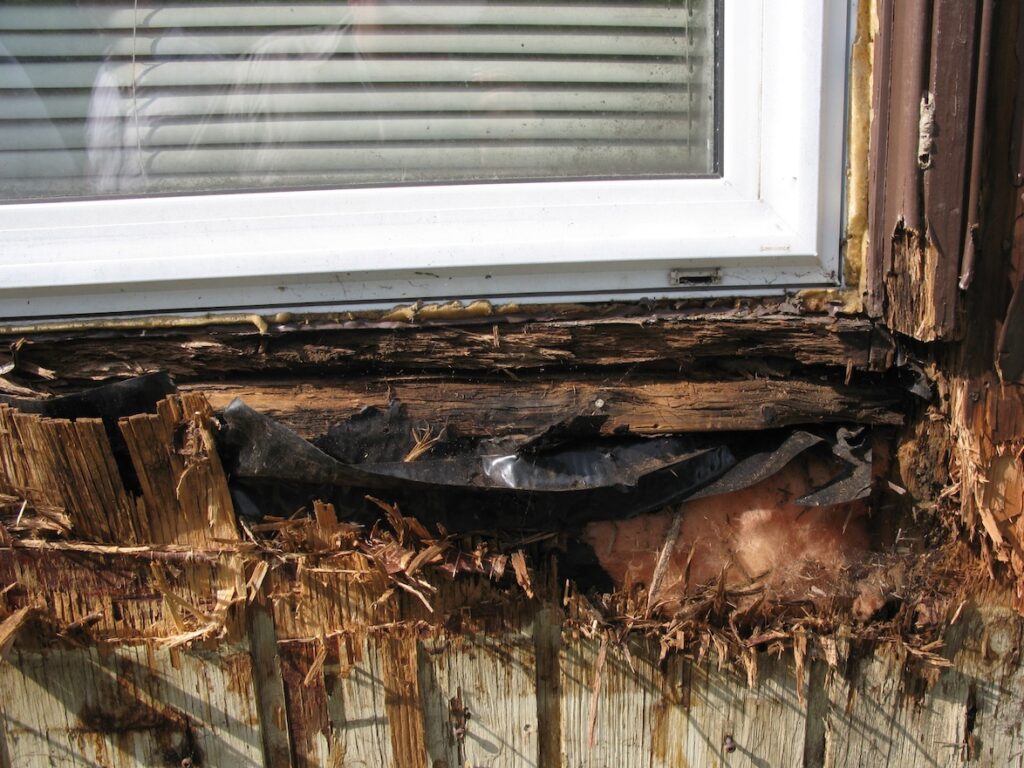
Deteriorated wood framing below a window, caused by ongoing leakage.

Carry out building envelope repairs without delay

Once moisture enters a building assembly, deterioration can continue until the problem is addressed, weakening materials, spreading damage to adjacent components, and escalating repair costs.

Addressing deficiencies as soon as they’re identified is one of the most effective ways to protect both the building envelope and the long-term value of the asset.

Water will always look for a way in, but with thoughtful design, multiple layers of defence, routine inspections and timely repairs, building owners can prevent existing minor moisture issues from ballooning into major building failures.

Published on July 20, 2026

Subjectively Objective: Balancing Thermal Comfort and Energy Efficiency

Energy and Carbon Reduction

Canada’s Path to Net-Zero Must Prioritize Both Energy Efficiency and the Occupant Experience

When energy efficiency measures are pursued without considering thermal comfort, we risk creating buildings that operate effectively but leave occupants dissatisfied with their internal environments.

Through the Canadian Net-Zero Emissions Accountability Act, the country is legally committed to reaching net-zero emissions by 2050, but, these ambitious reductions can’t be the only end goal.

Without balancing the importance of energy efficiency and thermal comfort in building designs, Canada risks missing the mark on what truly makes buildings sustainable: being spaces people want to use consistently, to live and to work.

Policy Context: The Missing Piece

The Canadian Net-Zero Emissions Accountability Act establishes long-term emissions targets and formal reporting requirements, yet it does not describe how performance should be achieved at the building level, leaving key responsibilities to the designers, engineers, and policymakers.

A major pillar of the effort is the Canada Green Buildings Strategy, which aims to lower emissions from both new construction and existing buildings. The approach focuses heavily on reducing energy efficiency gaps by improving insulation, upgrading windows, tightening envelopes, and minimizing unwanted air leakage.

Not once does the strategy mention indoor environmental quality (IEQ), which includes factors like lighting, acoustics, air quality, and thermal comfort – subjective elements that impact how an individual experiences a space.

Occupant Comfort: More Than Just a Thermostat Setpoint

Thermal comfort is often misunderstood and oversimplified. There is an assumption that setting a thermostat to a specific temperature ensures comfort, but as Robert Bean – one of Canada’s foremost authorities on the subject – puts it, Using the thermostat reading as a proxy for thermal comfort is like calling baking soda a cake.

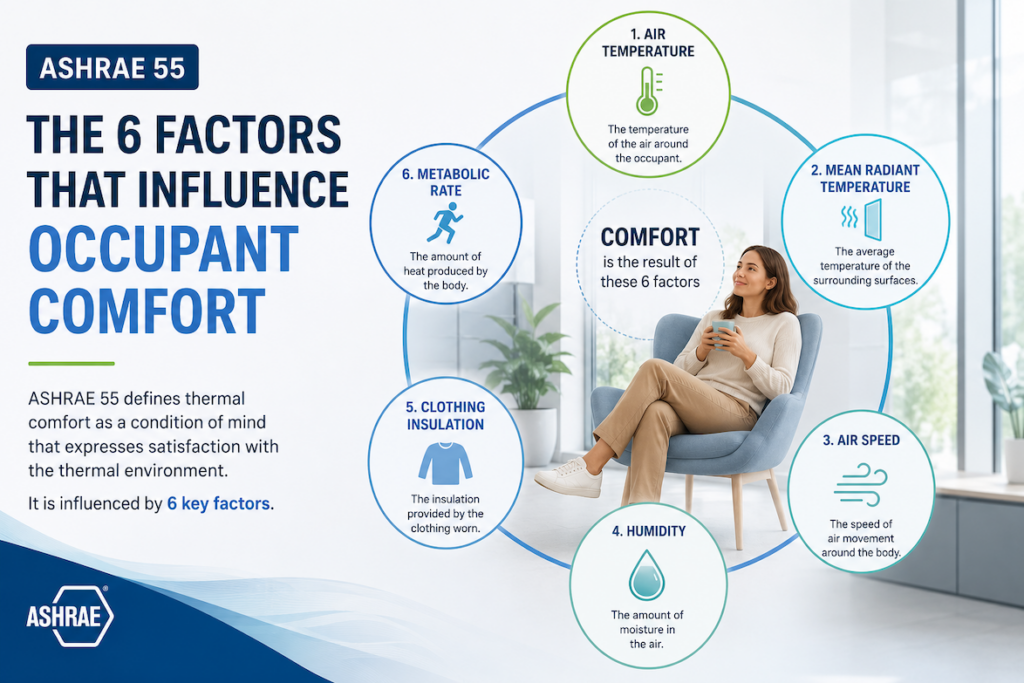
In reality, temperature is only one of six factors that influence our sense of comfort. These are defined in ASHRAE Standard 55 – Thermal Environmental Conditions for Human Occupancy. There are four physical factors that contribute to thermal comfort, including air temperature, mean radiant temperature, air speed, and humidity, along with two personal variables: one’s metabolic rate and clothing insulation.

These variables are expressed as numerical values that can be used to quantify personal comfort by calculating an index called the Predicted Mean Vote (PMV). This index predicts the average value of a large group of individuals’ self-reported perceptions of the different factors, called “thermal sensation votes,” based on a sensation scale that ranges from cold to hot.

Designing With Indoor Environmental Quality in Mind

A tight, highly insulated building envelope reduces heating demand and boosts energy efficiency. However, without proper attention to ventilation, radiant conditions, or humidity control, it could leave occupants uncomfortable, even unhealthy.

Research from Efficiency Canada highlights that high-performance buildings designed with passive strategies – think building orientation, shading, airtightness, and insulation – paired with efficient active systems like heaters and heat pumps, deliver both energy efficiency and thermal comfort.

Meanwhile, smart technologies such as occupant-centric controls allow systems to respond to peoples’ real-time needs, not just static thermostat setpoints.

At Pretium, we understand this and prioritize the balance between energy efficiency and thermal comfort in our approach to building design and retrofits.

With a multidisciplinary engineering team that includes building envelope specialists, mechanical engineers and energy performance experts, we take a unique, whole-building systems approach and evaluate any improvements alongside their impact on occupant comfort, placing peoples’ needs at the heart of building performance.

A Delicate Balance of Energy Efficiency and Thermal Comfort

Success in achieving net-zero goals requires buy-in from Canadians, so Canada can’t afford to treat energy efficiency and thermal comfort as competing goals.

Our buildings need to serve both climate targets and the people who live and work in them.

By treating buildings as systems and designing with the six factors of thermal comfort in mind, we can create spaces that are efficient, sustainable and – most significantly – enjoyable to spend time in.

Published on June 18, 2026

Stronger Teams, Better Outcomes: The Pretium Approach to Workplace Culture

Delivering excellence in technical service and solutions starts with a culture of quality

At Pretium Engineering, our team of building scientists, construction professionals, and engineers brings strong technical expertise to every project. Our culture, grounded in five core values, fosters an environment of accountability that is inclusive, rewarding, transparent, and collaborative. This foundation shapes how we work, how we communicate, and how we support one another.

Accountability: The foundation of trust

As a multidisciplinary firm, trust is essential. We rely on each other’s expertise, and our clients rely on us to deliver high-quality work. Establishing a sense of trust both within our teams and with our partners is paramount to maintaining our culture of quality, and the best way to build trust is to be accountable to one another throughout every project, conversation, and decision.

Whether we are conducting site assessments, supporting property managers and owners with reserve fund studies, or handling internal operations. Being accountable to one another helps projects run smoothly and reinforces the reliability Pretium is known for.

Collaboration and inclusivity: Better together

Collaboration is at the core of how we operate. We work best when we can share ideas, solve problems together, and learn from one another. We value being in the office as face-to-face interactions strengthen teamwork, mentoring, and creativity.

We also recognize that everyone brings different backgrounds and perspectives. Inclusivity ensures those voices are heard. We may disagree, but with gentle curiosity rather than judgment. This approach makes our work stronger and our team more connected.

Transparency: Clear communication, stronger results

Challenges can arise on any project, including miscommunications or differing perspectives. Rather than allowing issues to escalate, we prioritize addressing them early and constructively.

Transparency is maintained through clear expectations, well-defined roles and timelines, and regular check-ins to ensure alignment. When adjustments are needed, we work collaboratively to resolve them and keep projects moving forward. Clear communication remains central to maintaining focus and delivering successful outcomes.

Recognition and reward: Celebrating wins, big and small

People do their best when they feel appreciated. At Pretium, we make recognition part of our everyday culture.

We foster a culture where contributions are recognized, growth is actively supported, and individuals are empowered to take on leadership roles. Success is shared collectively, reflecting the strength of our team and the value each person brings.

Each month, we recognize team members through our Core Values Awards. These individuals are among the many past recipients of the Core Values Awards:

Nav Budhwa - At Pretium Engineering, we make recognition part of our everyday culture.
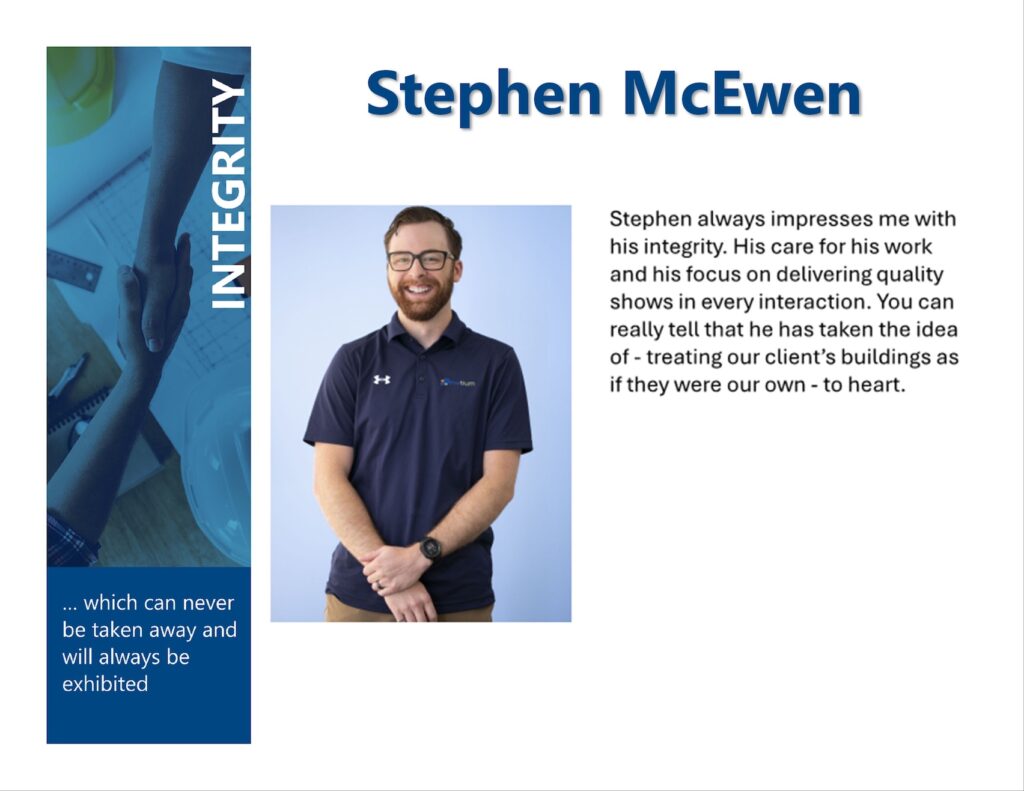
Stephen McEween - We foster a culture where contributions are recognized, growth is actively supported, and individuals are empowered to take on leadership roles.
Steve Krysa - At Pretium Engineering, our team of building scientists, construction professionals, and engineers brings strong technical expertise to every project.
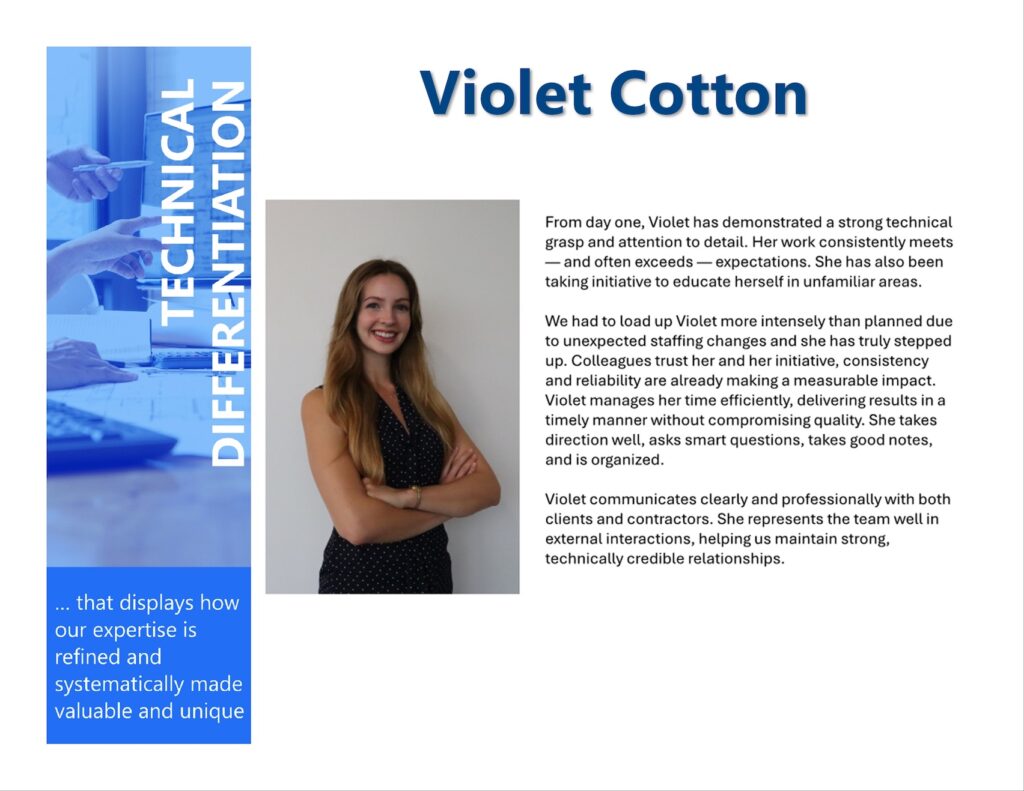
Violet Cotton - Rather than allowing issues to escalate, we prioritize addressing them early and constructively.

A culture where people can thrive

We are intentional about how we work together: holding each other accountable, communicating openly, and creating an environment where people feel supported and empowered.

Our culture is collaborative, grounded, and people-first. It’s what helps us navigate challenges, support each other’s development, and stay engaged in the work we do every day.

At the end of the day, Pretium is a place where people can contribute, learn, and build meaningful careers together.

Published on April 17, 2026